Advisor Perspectives welcomes guest contributions. The views presented here do not necessarily represent those of Advisor Perspectives.
ElmAI Summary
- A young founder holding QSBS-eligible shares faces a tradeoff: wait three years for up to $10 million in federal tax savings, or sell now to shed concentrated, uncompensated idiosyncratic risk.
- Using expected utility analysis that accounts for human capital, risk aversion, and the volatility of a single stock versus a diversified portfolio, the optimal move is to sell about half immediately, even at the cost of forgoing the tax break.
- Selling just 25% captures roughly 80% of the maximum risk-adjusted benefit, a useful middle ground if signaling concerns make a larger sale impractical.
Introduction
In March, Victor visited San Francisco for a Journal of Investment Management conference at Berkeley, to pick up an award for our Risk Matters Hypothesis article, and to spend some time with his son who lives there. He met with a young Elm client — let’s call him Arjun1 — who posed an interesting question. Like most questions involving risk, it can only be rigorously addressed within the expected utility (EU) paradigm. The question also draws on ideas from our recent “The New Yale Model” article on valuing human capital.
Here’s his problem (may we all face such “problems”!): Arjun founded an AI company two years ago and sold it to OpenAI last year in exchange for OpenAI shares. He can currently sell up to 50% of his holding. His shares are Qualified Small Business Stock (QSBS), meaning up to $10 million of capital gains would be exempt from the 23.8% Federal capital gains tax – but only if he holds for three more years to meet the required five-year holding period.2 Whether he sells now or later, he owes California tax of 13.3% on any gains.3 His holding is currently worth $7.5 million at the price OpenAI shares trade at in the private market.
How much, if any, should he sell? Waiting three years likely means selling most or all of the position tax-free at the Federal level. But in the meantime, he bears the concentrated, and — according to standard finance theory — uncompensated idiosyncratic risk of OpenAI stock versus a diversified portfolio with a more attractive return-to-risk ratio.
To answer this, we need to know more about Arjun’s situation and make some simplifying assumptions. We need to assess the value and riskiness of his human capital, his degree of risk-aversion, and the expected return and risk of both OpenAI stock and the broad market. We’ll also assume the tax code stays as-is and that Arjun isn’t moving to a lower-tax state.
Markets:
- Risk-free three-year return: 4%
- Expected arithmetic return of stock market: 7%
- Annual variability of stock market: 18%
- Expected return of OpenAI ( = 1.5): 8.5%
- Annual variability of OpenAI stock: 50%
Arjun:
- Current age: 26
- Expected age at retirement: 60
- Average lifetime post-tax, inflation-adjusted earned income: $250,000 per annum
- Total variability (standard deviation) of sum of lifetime income: 80%
- Correlation of income with stock market: 0.3
- Pension and social security: 30% of expected average income
- Risk-aversion: 2.54
- Holding period to benefit from QSBS: 3 years
- Current value of OpenAI holding: $7.5 million
- Other savings: Small enough to ignore
Putting a Value on Arjun’s Human Capital
First, we put a value on Arjun’s human capital. As we discussed in the New Yale Model article, we discount his expected future compensation at a rate above risk-free to reflect the uncertainty in his lifetime earnings and its correlation to the stock market.5 We also account for expected longevity.
We estimate his human capital at about $2.9 million, with a stock market beta of 0.3. We can think of roughly $2 million of this as a low-risk, long-term bond, and the other $1 million as equity-like exposure.6
Calculating the Optimal Amount to Sell
Whenever faced with tradeoffs between risk (holding OpenAI for longer) and return (paying less tax), we recommend turning to expected utility. The method of maximizing expected utility is the most sensible technique for making these tradeoffs, taking into account both your personal preferences and the specifics of the situation. And as we discuss in The Missing Billionaires, Expected Utility can always be converted into risk-adjusted return or wealth metrics, which are easier to think about.
So what we need to do is calculate the risk-adjusted value of Arjun’s total wealth — financial plus human capital — as a function of how much OpenAI stock he sells today, assuming he buys an appropriate amount of broad stock market exposure. Figure 1 shows the result.
Given our assumptions, it is optimal — in that it gives Arjun the highest risk-adjusted wealth — to sell about 70% of his OpenAI holding today, foregoing the tax savings from waiting three years, and to reinvest just 7% of his after-tax sales proceeds in the stock market.
The risk-adjusted benefit he gets from this decision is $1.04 million, or a 10% increase in his total wealth. Note that selling just 35% captures about 80% of the maximum gain available, in case Arjun feels it would send a negative signal to his employer if he parted with 70% of his holding in such a hurry.
Sensitivity to Inputs
We needed more than a dozen inputs for this analysis. Some matter much more than others:
- Perhaps most important is the size of Arjun’s holding. If he had an amount of OpenAI that he expected to be worth more than $10 million in three years, then since the QSBS benefit is capped at $10 million of gains for stock issued or bought before July 5, 2025, there would be an even stronger case for divesting immediately.
- The riskiness of OpenAI stock is critical. For example, at 40% OpenAI stock volatility instead of our base case of 50%, it’s optimal to sell just 48% of his holding. No public company is a close match for OpenAI, but we note that the average volatility of Palantir, Tesla, and Nvidia over the past two years is 58%, and we think they are about as comparable as we can find. Given OpenAI’s smaller size and organizational risk, 50% may be a low estimate for its expected volatility.
- Arjun’s risk-aversion also matters materially. At a coefficient of 2 or 3 rather than 2.5, the optimal sale shifts down or up, respectively, by roughly 10%.
- Time remaining to the five-year threshold matters too. With two or four years to go instead of three, the optimal amount to sell shifts down by 18% or up by 10% respectively.
- The size and character of Arjun’s human capital, surprisingly, is less important than we expected, though it still has some impact. For example, a 20% increase in the value of Arjun’s human capital reduces the optimal amount of OpenAI to sell by just 2%.
Other Tax-Sensitive Actions
Many wealth managers offer tax-loss harvesting programs involving single stocks, sometimes with leverage and shorting. These tend to come with meaningful fees, considerable complexity, and can effectively involve long-term lock-ins. We have expressed some skepticism about these approaches. We believe the best long-term after-tax, net-of-fee, risk-adjusted returns come from first choosing how you want to invest, then being tax-efficient within that framework.
Calculator
If you’re an Elm client or follower, you can find the calculator we used for the above analysis here. As we said before, this article and the free calculator too are for educational and illustrative purposes and should not be taken as tax or investment advice.
This is not an offer or solicitation of investment services or financial advice. It is the views of the authors, subject to change, and not necessarily the views of Elm Wealth, where the authors work. Although this article discusses taxation, the authors are not tax experts and nothing herein should be construed as tax advice. Past returns are not indicative of future performance.
Victor Haghani is founder & CIO of Elm Wealth, a Philadelphia-based asset manager. James White is Elm Wealth’s CEO.
Endnotes
1 We’ve changed details such as our client’s name and the buyer of his company to protect his privacy.
2 The QSBS rules are subtle and complex; nothing in this note constitutes expert tax advice. Please consult a tax adviser if you think these questions are relevant to your situation.
3 There are additional complexities including the 10x cost basis limitation, whether the $10 million or the $15mm exclusion applies, and others.
4 Assuming Arjun’s risk preferences are well-represented by constant relative risk-aversion (CRRA) utility.
5 More specifically, the discount rate we use is , where y is Arjun's coefficient of risk-aversion, and p are the variability, Beta and correlation with the stock market of Arjun's human capital.
6 Probably with some extra correlation to frontier technology stocks like OpenAI, though we haven’t modeled that here.
A message from Advisor Perspectives and VettaFi: Discover something new! Click here to register for our upcoming webcasts.
Read more articles by Victor Haghani and James White
 Advisor Perspectives welcomes guest contributions. The views presented here do not necessarily represent those of Advisor Perspectives.
 , where y is Arjun's coefficient of risk-aversion,
 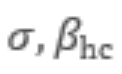 and p are the variability, Beta and correlation with the stock market of Arjun's human capital.