With growth in both economies underpinned by trade, neither side has much appetite for a large‑scale economic confrontation. That reality should push both capitals toward calibrated responses rather than actions that sharply raise the costs of retaliation.
Browsing real-estate listings is a popular hobby. Home data portals provide hours of free entertainment. Some listings feature bizarre or ostentatious decoration; some are time capsules, preserving a bygone era. Most entries share one shocking feature: the price.
A financial innovation brings new insights and new risks.
After more than two decades of talks, the EU has reached a free trade deal with Mercosur, the South American common market that includes Brazil, Argentina, Uruguay and Paraguay. More recently, Europe concluded an agreement with India, an accord nearly twenty years in the making.
Prices in efficient markets will rapidly adjust to reflect new risks and developments. The year has started with a flurry of geopolitical events, which have created significant volatility in the markets for currencies and commodities.
At the start of my career, the Federal Reserve was content to operate in the shadows. Today, by contrast, the Fed is a much more public entity. And so the fact that the derby to become the next Chairman played out so vividly in the media was not surprising.
Affordability and the cost of living have become frequent topics of conversation. Costs rose, but incomes did not immediately keep pace. The rate of inflation has moderated, but consumers remain sensitive to high prices, worried they are falling behind.
Climatically, Europe has been fortunate: its winter has been moderate so far. But Europe’s need for fuel remains substantial, and the cooling of relations between the U.S. and the European Union (EU) may make it more difficult to keep EU homes and the EU economy warm.
Municipal credit remains strong in 2026 with high reserves and sector resilience. Still, policy changes and economic pressures ahead warrant attention.
A sharp productivity jump shows firms doing more with fewer workers. But the upside surprise also highlights growing risks about how these gains affect the workforce.
New 25% tariffs will be placed on a small set of advanced semiconductors. The list of exemptions was long, allowing free imports of chips bound for data centers, research, startups and the public sector. The new tariff does not apply to finished products that use these chips, like laptops and smartphones.
What appeared just months ago to be a stable and predictable transatlantic trade environment now looks conditional. The ground underneath transatlantic trade relations is once again shifting…even though critical portions of it are covered by permafrost.
Classical economics suggests that information is readily available, and is assimilated quickly and accurately. Reality is not that neat: the discipline of behavioral economics has consistently demonstrated that human beings are prone to a series of biases and miscalculations.
Long trips rarely end at the airport. We arrive, but our internal clocks lag behind; the first day back is spent acclimating to the new landscape. The global economy enters 2026 in much the same way. Shifting rules of commerce, political stoppages and patchy data have left decision makers disoriented.
Greenland has reemerged as a center of geopolitical attention. Its location midway between Washington and Moscow, combined with its position along maritime routes linking the Arctic and Atlantic Oceans, has long made it a focal point for trade.
We are in the midst of a tech-led investment boom supporting what some think is a transformational technology. The annualized pace of U.S. productivity growth was 5% in the third quarter of last year, well above the long-term average.
Taking time away due to illness is never ideal. Upon return to school or work, we are greeted with all the tasks we did not complete while incapacitated. The recovery may feel worse than the disease.
Defaults among auto loans are noteworthy because these had been seen as a safe form of lending. Living without a car is impossible in much of the United States; in the GFC, borrowers were more likely to surrender their home than their car.
Mao Zedong once warned that power grows out of the barrel of a gun. In recent decades, global institutions and markets that make kinetic interventions less common. But when those mechanisms fail, power will fill the void.
We just closed another banner year for asset prices. The S&P 500 was up 16% in 2025, and many overseas exchanges saw gains of more than 25%. Bond prices rose, and most housing markets held onto high values. There were even some signs of recovery in commercial real estate.
From an investment perspective, the financial ramifications operate on two levels — direct and indirect effects. The most direct effect is visible in the distressed debt market. Bonds issued by PDVSA, Venezuela’s state-run oil company, remain in technical default but had already begun a sharp rally in mid-December. Investors, anticipating an increased likelihood of regime change, have now seen that thesis validated.
We examine what’s driving gold’s ascent — from central bank reserves to portfolio hedging — and why it can play a strategic role for investors.
Reflections on the unexpected outcomes of an unpredictable year.
This year has witnessed some of the most significant policy shifts in recent memory. Economic, strategic and fiscal norms have all been challenged, creating a level of uncertainty that has been hard keep up with.
U.S. consumers are seeing a tangible rise in their monthly utility bills, with the average residential cost increasing to $142 in 2024, double the general inflation rate.
With great power comes great responsibility. But in the age of artificial intelligence (AI), power means megawatts, not metaphors.
The rapid expansion of Artificial Intelligence (AI), while promising increased productivity, is creating a significant and often overlooked strain on the global power grid.
Equity markets reached new record highs over the past month, reigniting debate over whether we’re in bubble territory. Heightened U.S. equity valuations and concentrated market leadership fuel this concern — but context matters. Markets rarely move in straight lines, and short-term pullbacks, while uncomfortable, are a normal part of the cycle.
The trade dispute with the U.S. is proving to be a 'full-blown blizzard' for Canada, threatening to freeze cross-border commerce in a deeply integrated relationship. Despite the majority of goods remaining duty-free, new tariffs—reaching 35% in key sectors—have caused a sharp decline in Canadian exports, pushing the nation toward recession.
This article reviews historical and contemporary attempts by world leaders—from Nixon's price controls to European energy subsidies—to contain costs, ultimately illustrating the limits of policy intervention in combating inflation. While some measures provided temporary relief, the persistent challenge of high prices remains a central political concern.
We enter 2026 after a year of robust global stock gains on AI optimism, falling interest rates and a resilient world economy. Beneath this stability, however, lies a more fragile environment.
In times of uncertainty — whether in sport or in markets — the ability to separate fact from feeling — or ideology — is critical. This principle applies across leadership, investing and even today’s AI-driven economy.
We examine valuations in historical context, how today’s market compare to the tech bubble of the 1990s and what’s driving stock gains now.
Closing the books on fiscal year 2025, the U.S. ran a deficit of $1.77 trillion, a slight improvement from $1.83 trillion in 2024. But a peacetime deficit exceeding 6% of gross domestic product (GDP) is still cause for worry.
Capital controls can be used to keep investors at home. Bank reserve and liquidity requirements can also be employed for this purpose: U.S. banks hold $2 trillion more in government debt than they did six years ago.
The prime-age labor force participation rate of 84.6% in January 1999 is still a record high. But the pace of hiring distinguishes the two eras. In the 1990s, anyone with marginal tech skills could readily find work. Information sector employment grew over 27% from 1995 to 2000, while total nonfarm employment gained 12%.
Looking back to the 1990s need not be just a matter of nostalgia. Those too young to have lived it envy the fortunes made as technology firms grew. Seasoned investors who worked through the cycle can warn us of the pain of a correction. Along the way, the cycle taught useful lessons.
Sports wagering has come a long way since then. Global revenue derived from this activity now exceeds $100 billion, and is expected to grow exponentially in the years ahead.
2025 has not been just a story of U.S. resilience. The Asia-Pacific (APAC) region has weathered storms and stayed firmly on course.
Before we started some recent home renovations, neighbors offered advice: stay patient. Construction projects feature weeks that feel like no progress has been made, and days that feel like everything has changed at once.
Every innovation follows a lifecycle, from breakthrough to ubiquity to obsolescence. The Edison bulb once lit up the world, transforming how we lived and worked. But it was ultimately replaced by more efficient and sustainable alternatives.
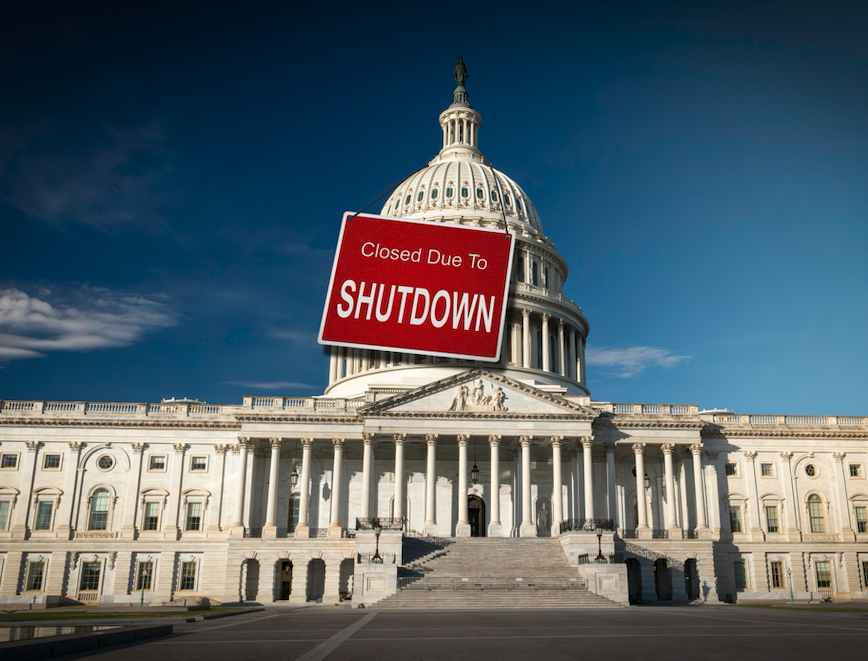
The U.S. government shutdown is about to enter its second month. We did not rush to comment on it, because we didn’t think that it would have much of an economic impact. But the risk that lasting damage will be done is rising.
While many lessons have evolved over time, one maxim has never changed for children: look both ways before crossing the street. I reinforced with my children to then look again. We might not see everything on a quick glance, and traffic can change quickly.
Two weeks ago, the International Monetary Fund (IMF) issued an updated World Economic Outlook. In it, the IMF edged up its global growth forecast for 2025, suggesting that U.S. tariffs haven’t turned out to be as damaging as the Fund anticipated in April.
These shifts are not signs of stress; shortfalls have been minor, and relief systems are working as intended. However, we can be certain the era of excess liquidity has ended. Fed speakers have characterized the pandemic-stimulated economy as one of “abundant reserves,” with bank reserves elevated beyond their natural level.
Global equity markets have surged this year, in spite of moderate economic growth and an accumulating series of risks. This has led some to worry that valuations have been stretched a little too far. The same can be said of credit markets, which have seen spreads fall to levels last seen in 2007.
U.S.-China frictions continue, highlighting that greater volatility is likely not a bug of the current trade stand-off but a feature of the emerging geopolitical landscape.
Not all low volatility strategies are created equal. The goal may be simple — smoother returns with less risk — but execution determines success. Portfolios built only on historical volatility can leave investors vulnerable.
After an extended period of surprisingly resilient economic activity, marked by buoyant consumer spending and robust labor market gains, the U.S. economy is shifting gears. The sprint phase, characterized by fiscal tailwinds and pent-up demand, is giving way to a more measured pace.
Broad measures of the U.S. economy are strong. Stock market indices have set new record highs this year.