As a financial advisor looking to jump to independence as an RIA, you have two doors from which to choose.
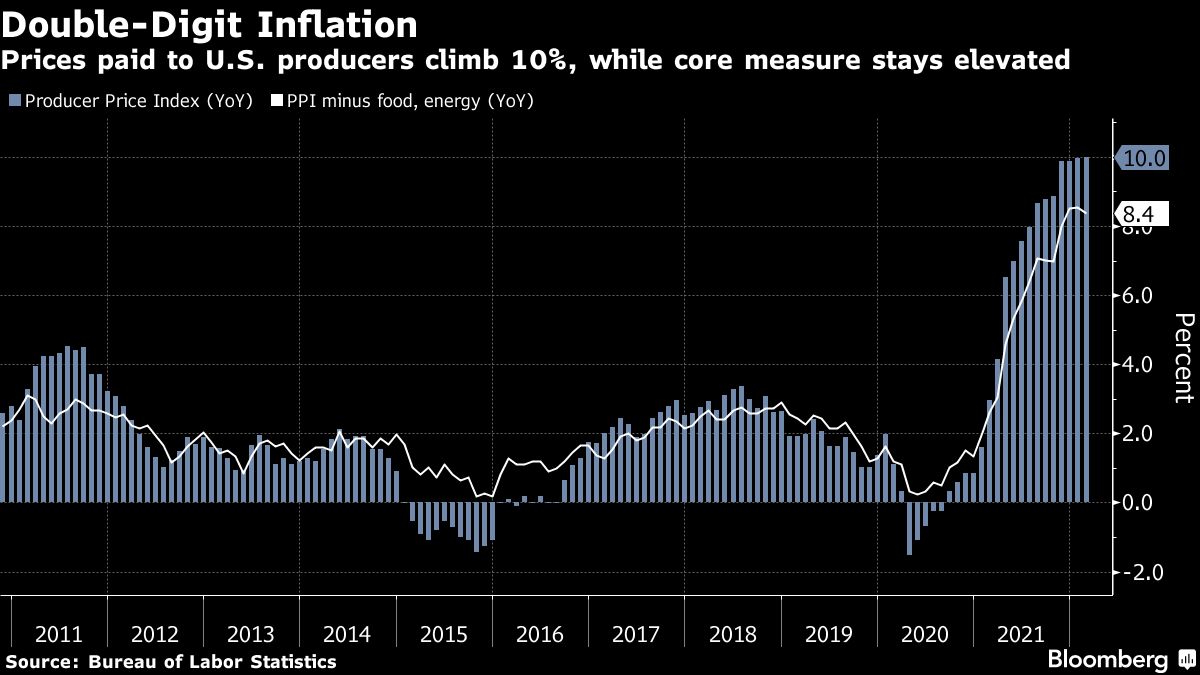
Prices paid to U.S. producers rose strongly in February on higher costs of goods, underscoring inflationary pressures that set the stage for a Federal Reserve rate hike this week. The producer price index for final demand increased 10% from February of last year and 0.8% from the prior month, Labor Department data showed Tuesday. That followed an upwardly revised 1.2% monthly gain in January.
The most important news for long-term investors is rarely in the headlines. Great contrarian plays rarely come from things most people don’t believe, rather they are based on things most people ignore.
Crypto markets still have many puzzles, but they are beginning to reveal their secrets. The last few months of chaos show what Bitcoin and other crypto assets are good for: They are advanced tools of globalization, luxury goods for complex, well-functioning markets — not protections against the depredations of hostile governments.
Since Wuhan two years ago, China has had relative success in minimizing disruption by bringing virus cases quickly under control. Now, the geographic spread of infections and higher transmissibility of the omicron variant is challenging the country’s hawkish pandemic strategy of aggressive testing and locking down whole cities or provinces.
As risks pile up for global equity markets -- from soaring inflation and central bank policy tightening to the economic fallout from Russia’s invasion of Ukraine -- the list of indexes that have fallen into bear market territory is growing.
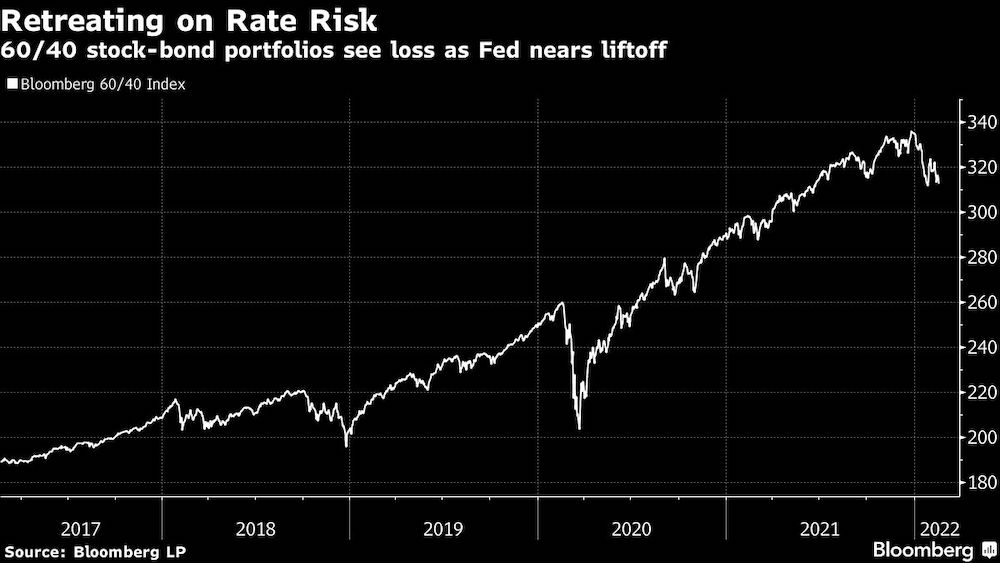
The classic 60/40 portfolio -- a strategy named for the share allocated to equities and high-grade debt, respectively -- is down more than 10% this year, leaving it on pace for the worst drubbing since the financial crisis of 2008.
Choice – more options – as the finest luxury of all. When an advisor helps a client, the door to better options and choices opens wide.
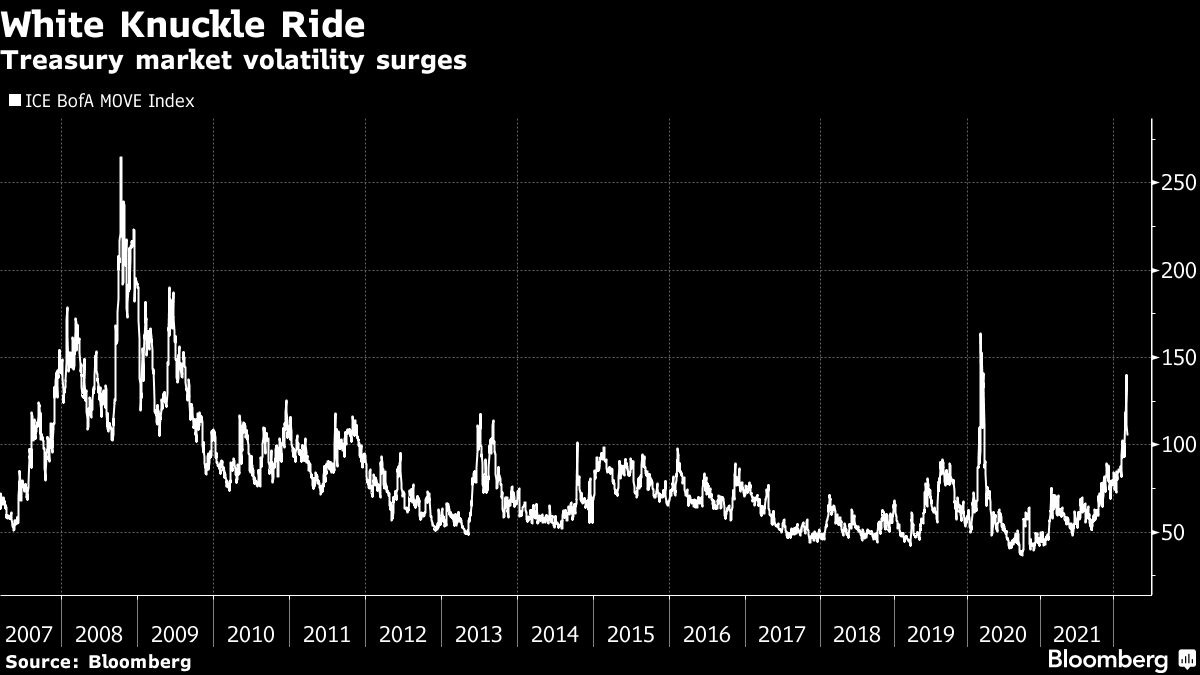
The surging volatility in the world’s biggest bond market is challenging traders trying to play both tighter global monetary policy and a war-induced commodity price shock that’s raising the specter of 1970s-style stagflation.
The Federal Reserve is in a deep hole of its own making as its top policy committee meets this week to announce the start of a long-anticipated cycle to raise interest rates. Inflation is at a 40-year high and still accelerating, the Fed’s inflation-fighting credibility is damaged, and it has lost control of the monetary policy narrative.
These are uncertain times, but we’ve never lived with less risk. That may sound crazy coming out of a pandemic that disrupted our lives in uncountable ways — and now we may be on the brink of World War III. But there is a big difference between risk and uncertainty, and each requires different coping strategies.
Russia’s invasion of Ukraine is a much smaller conflict than World War I, and the trade disruptions associated with the U.S./European quasi-embargo on Russia are smaller than the British blockade of the Central Powers. But the clash is nonetheless a giant step away from globalization — and, unlike World War I, it comes at a time when the world has already been moving away from economic integration.
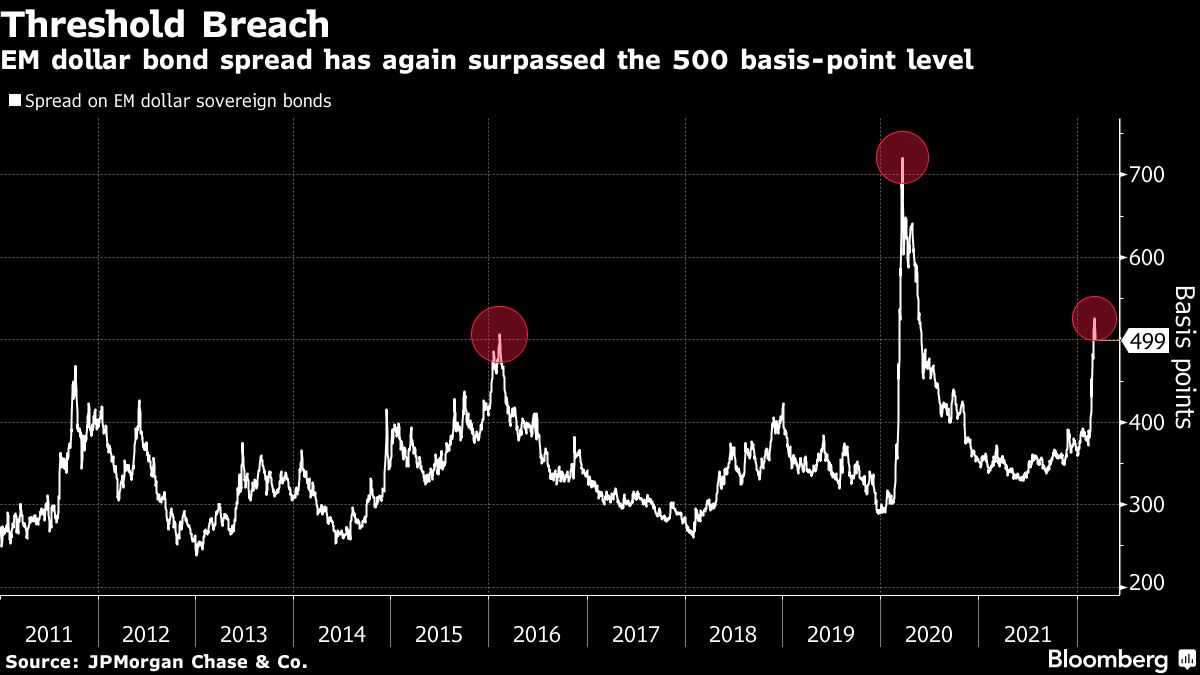
The extra yield offered by developing-nation sovereign debt over U.S. Treasuries has risen above 500 basis points, crossing a threshold breached only two other times in more than a decade. That’s drawing money managers including FIM Partners and Vontobel Asset Management to bet spreads will quickly tumble, just like they did following the previous spikes.
Corruption is “a cancer that eats away at a citizen’s faith in democracy,” said a certain vice president, back in 2014. Now commander in chief, Joe Biden must confront a corruption problem unfolding on his watch: the spiraling costs of misspent Covid funds.
An important part of tax planning is medical expenses, which add up quickly. Your clients (including spouses and dependents) will have medical expenses throughout the year, and hanging onto those receipts could save them money this year.
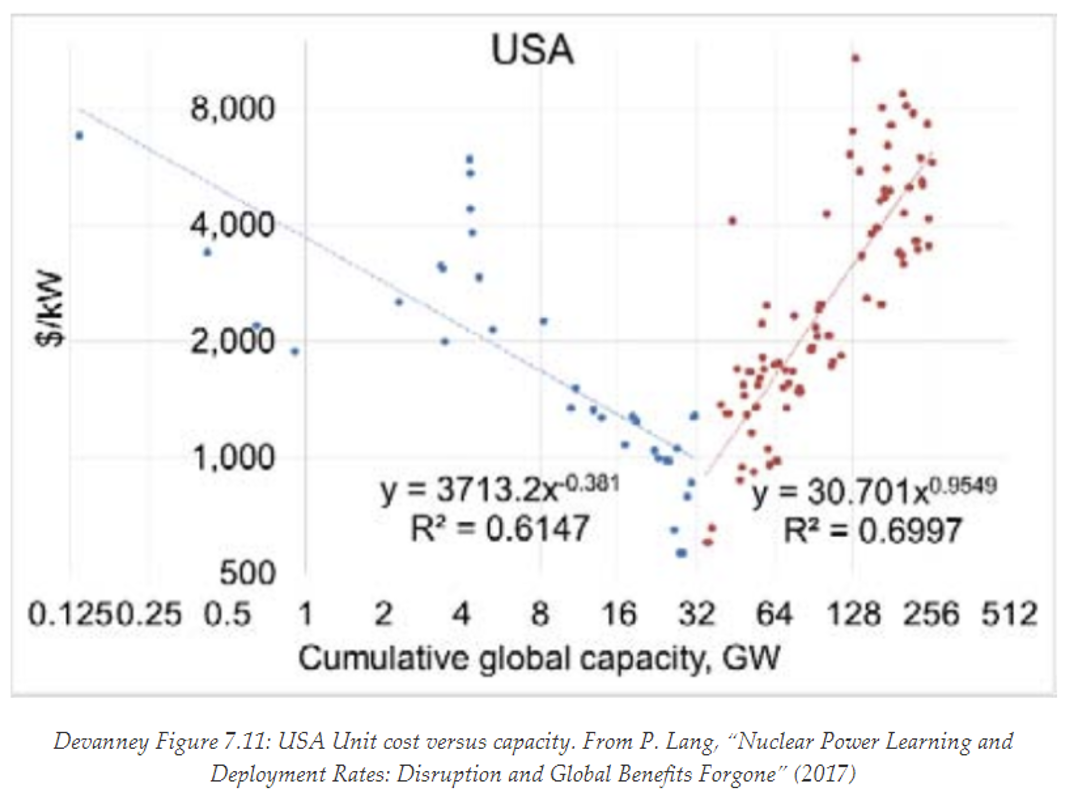
The failure to even mention nuclear energy as a solution for climate change is a mystery. What is the reason for this neglect of what would seem the world’s best hope for abating carbon emissions?
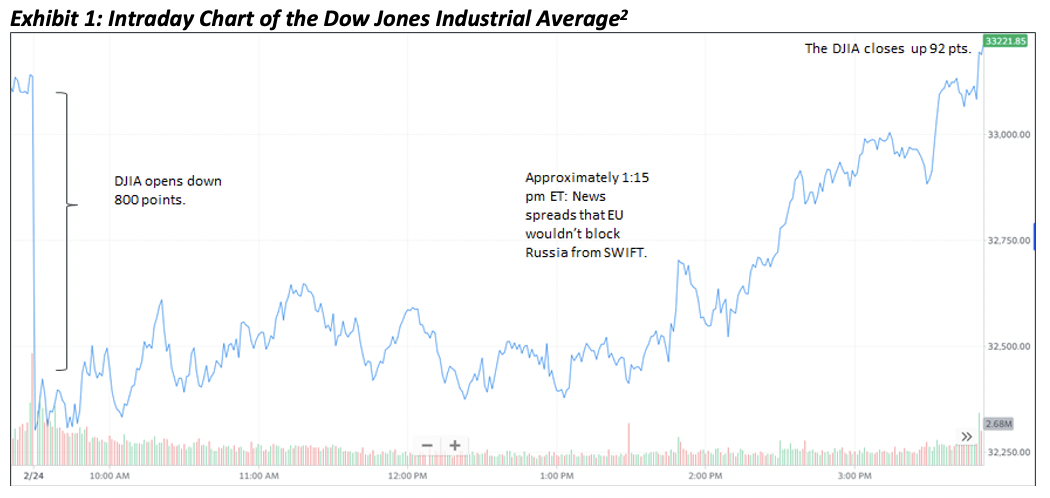
All geopolitical crises, including the current one, present three timeless lessons investors would be wise to heed.
Section 1202 of the Internal Revenue Code provides for an exclusion of up to $10,000,000 of capital gains (or, if greater, an exclusion of up to 10 times one’s basis) in connection with the sale of qualified small business stock (QSBS).
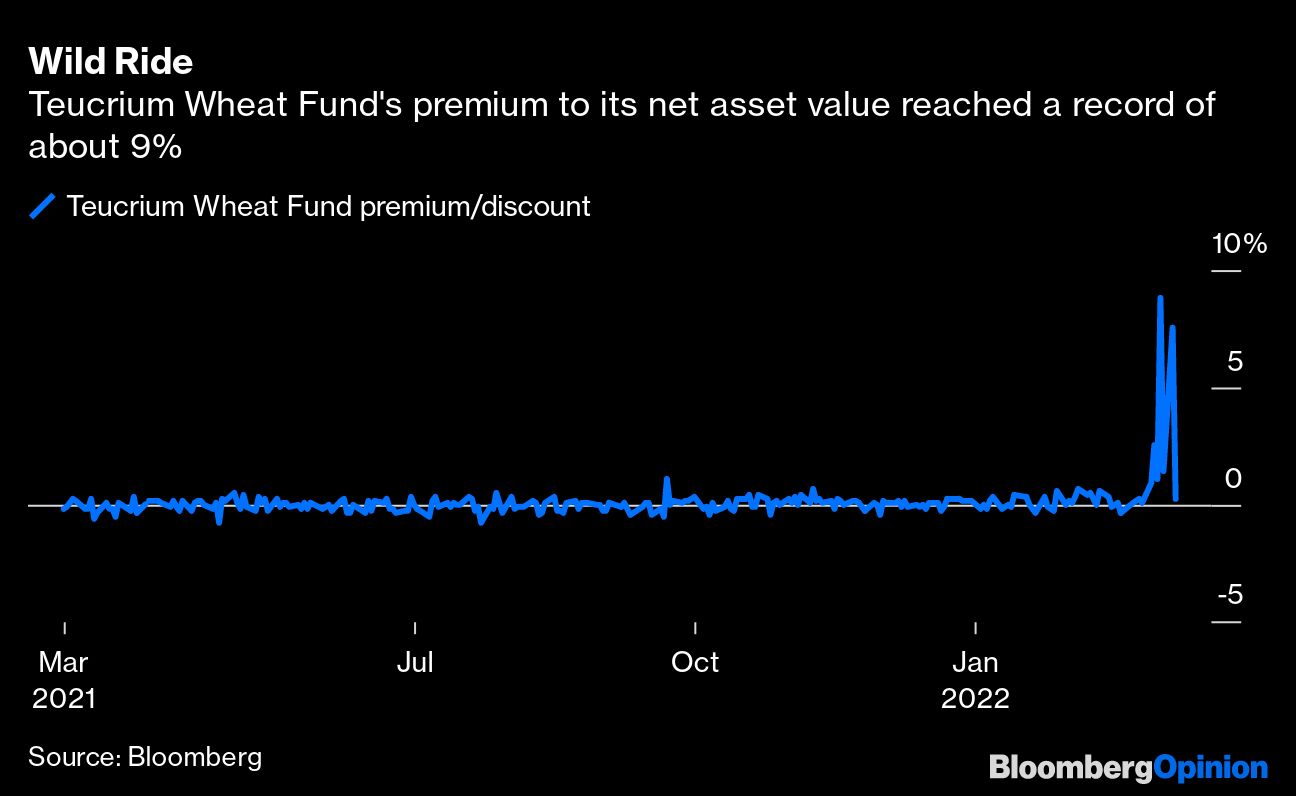
The extreme outperformance of commodities over the last several weeks has sparked interest in this asset class. New research finds that commodities are subject to lottery-like returns, providing information on future performance.
On March 1, two unrelated Securities & Exchange Commission actions set out the state of its thinking on enforcing the “best interest” and “fiduciary” standards.
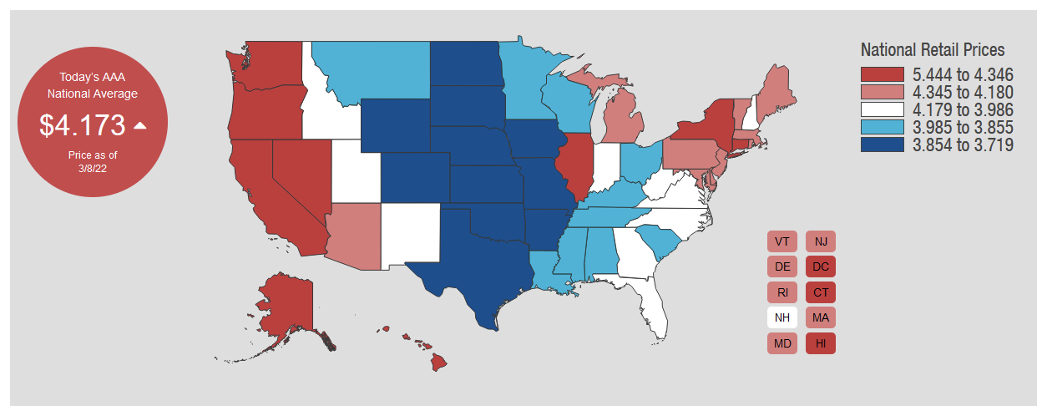
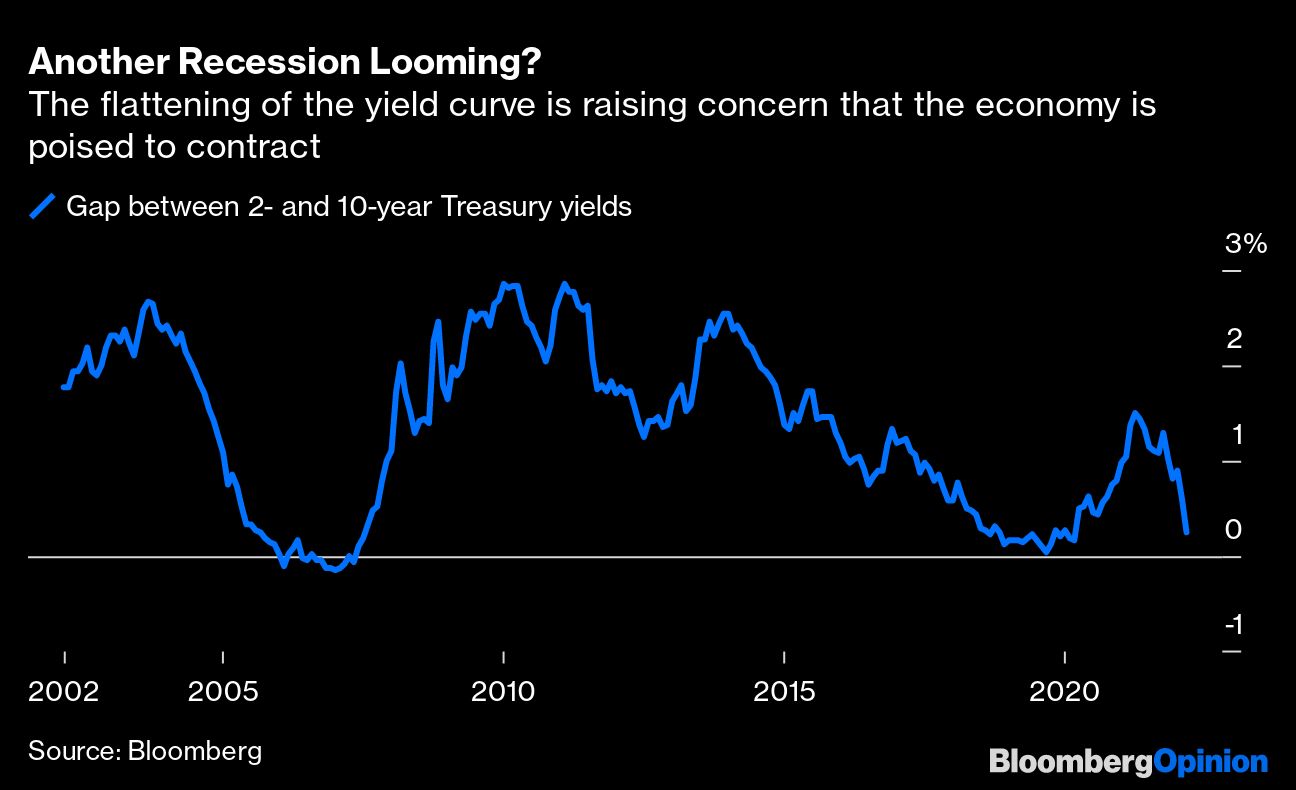
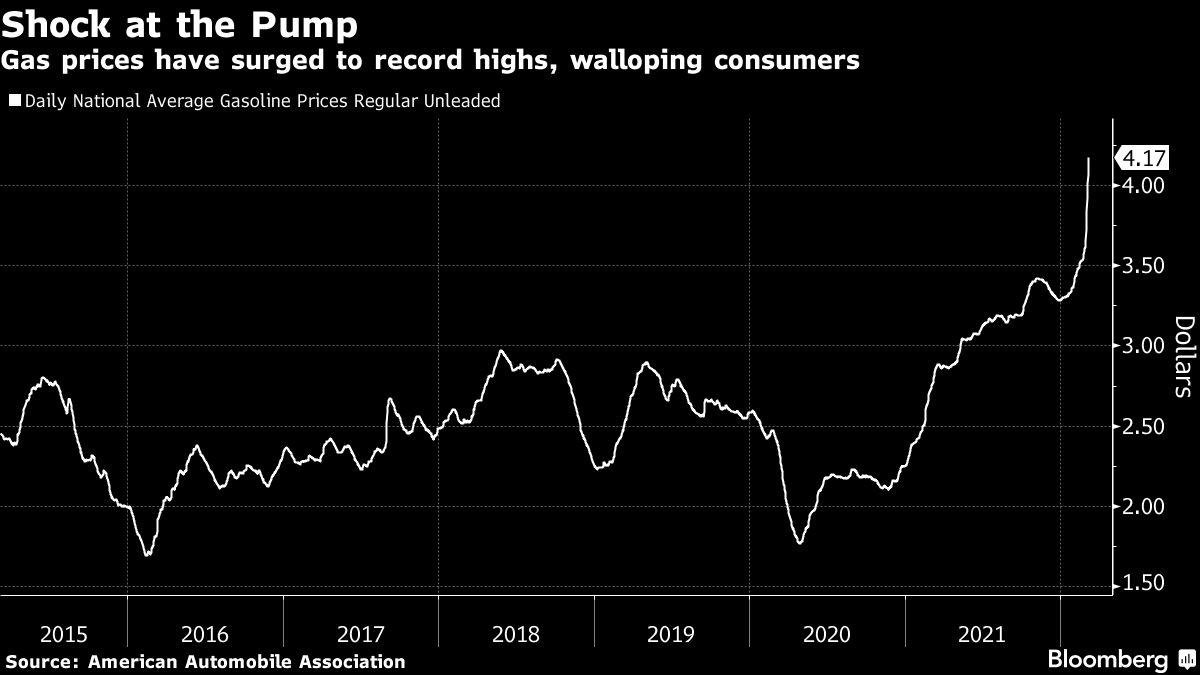
While higher gas prices may be welcome news to the oil industry, the rest of us should be concerned. It is a glaring recession warning. Over the last 40 years, higher gas prices have been linked to economic stagnation and recessions.
A message from our CEO, Robert Huebscher, on the war on Ukraine.
After the close of regular trading Wednesday, Amazon.com shares surged as much as 10% after the internet giant announced plans for a 20-for-1 split. The company also said it would buy back up to $10 billion of its stock.
In Congressional testimony on March 2, Federal Reserve Chair Jerome Powell said that “it is more likely than not” that the central bank “can achieve what we call a soft landing” in the economy. In other words, he believes that the Fed can raise interest rates enough to get raging inflation under control without forcing the economy into a recession. The odds that Powell can pull that off are getting longer by the day.
Commodity prices have soared the last two weeks as a result of the Russian invasion of Ukraine, drawing novice investors looking to make a quick buck. Many are already getting burned by their lack of knowledge.
The U.S. Federal Reserve is widely expected to raise interest rates by at least a 25 basis points next week. And if inflation stays high, the Fed is “prepared to raise by more than that” in the coming months, Chair Jerome Powell said last week.
After an unrelenting year of fighting off cyber threats, the financial services sector should expect more of the same or even worse, as nation-state hacking campaigns are expected to mirror geopolitical tensions and ransomware gangs retool to dodge increased scrutiny, according to an industry group report.
A historic surge in commodity prices after Russia’s invasion of Ukraine, coming on top of already-high pandemic inflation, has gotten investors and economists searching for parallels with the energy shocks of four decades ago and the prolonged slowdowns that followed.
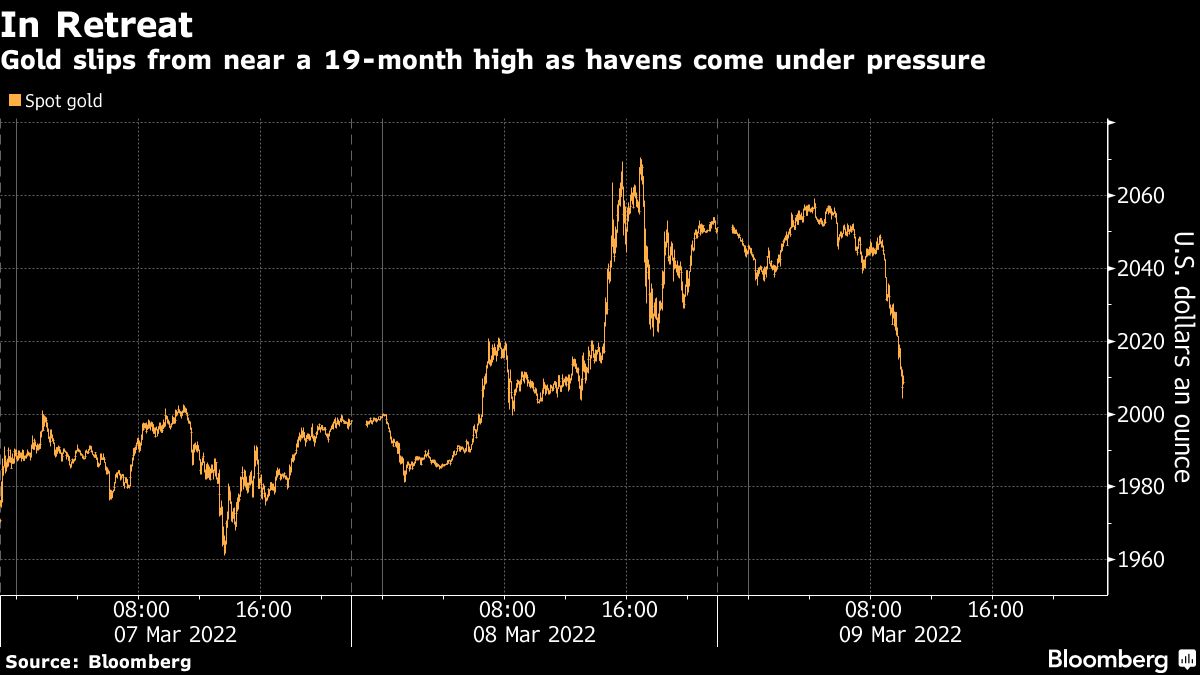
Gold fell from near a 19-month high as risk sentiment improved, despite ongoing concerns that the fallout from Russia’s invasion of Ukraine will further fuel inflation and hurt economies.
Any increased capital spending by U.S. oil and gas producers in response to the surge in crude price should help soften the blow to the economy from an expected pullback in consumer spending. It just won’t be anytime soon.
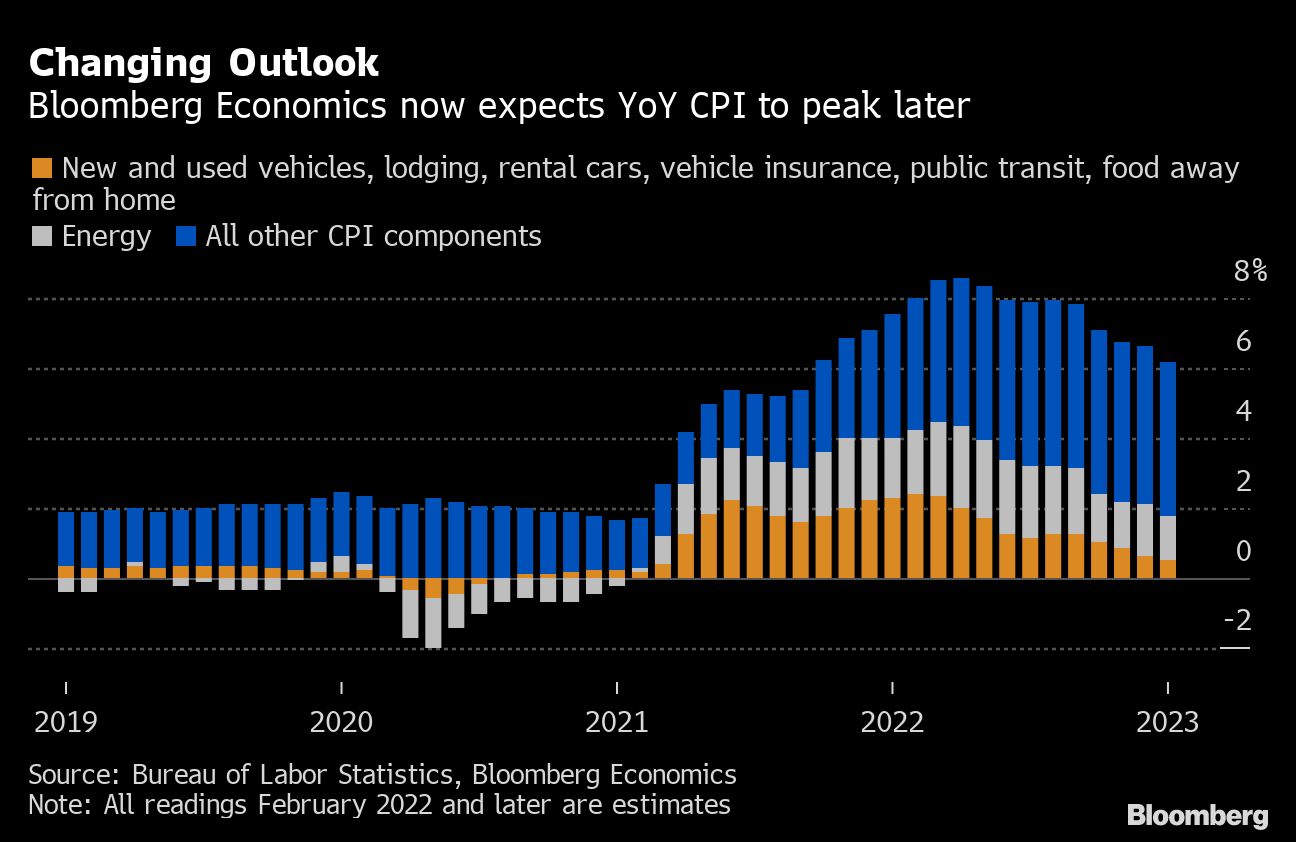
The consumer price index, due Thursday, is forecast to accelerate to a 7.8% increase in February from a year ago, which would be the most since 1982. But economists are now saying it could peak somewhere in the 8%-9% range this month or next, as the invasion of Ukraine and severe restrictions on the Russian economy send the prices of staples like oil and food soaring.
Whether it was friends or total strangers, everyone seemed to have the same question for me on a recent trip. Is it time to buy the dip in stocks? After all, U.S. stock markets have already had a few encouraging bounces in the past two weeks of trading, though they proved both temporary and more than fully reversible.
The business of influencing cryptocurrency policy in Washington exploded last year and has more than quadrupled in the past four years, according to a new study.
Two prominent U.S. economists from opposite ends of the political spectrum say the federal government should provide cash to consumers squeezed by soaring inflation and surging energy costs.
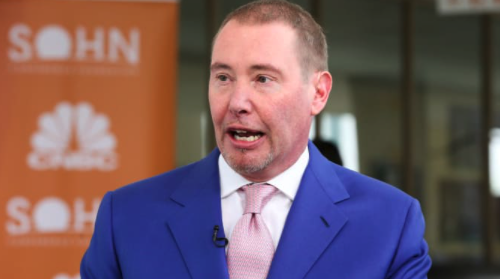
Headline inflation will breach 9% this year, according to Jeffrey Gundlach. That will force the Fed to aggressively raise the Fed funds rate.
Many people experience setbacks or life circumstances that result in temporarily relying on others for financial help. Being financially dependent in the longer term, however, is a financial disorder.
ICYMI: In this roundup, we’re highlighting the five most popular pieces of content from the previous week.
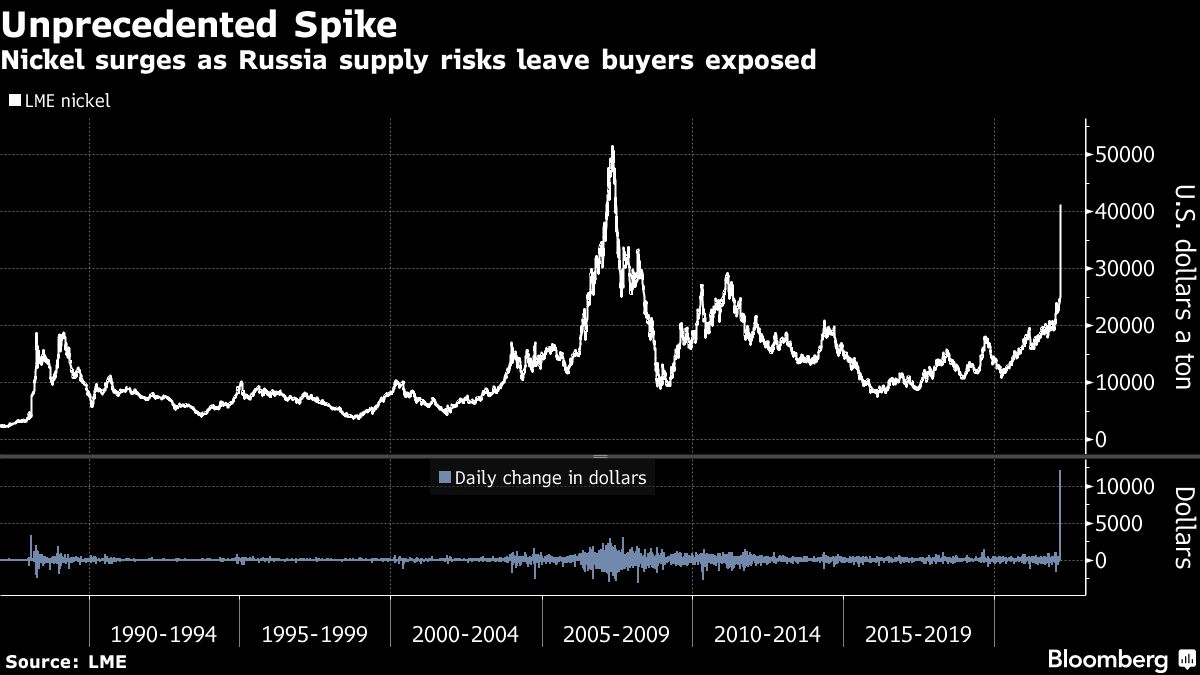
The price of nickel spiked more than 60% Monday, one of most extreme moves ever seen on metal markets. Here’s why that matters and who’ll take a hit. The metal added more than $10,000 to trade at a 15-year high above $40,000 a ton -- the biggest-ever daily dollar gain in the 35-year history of the contract.
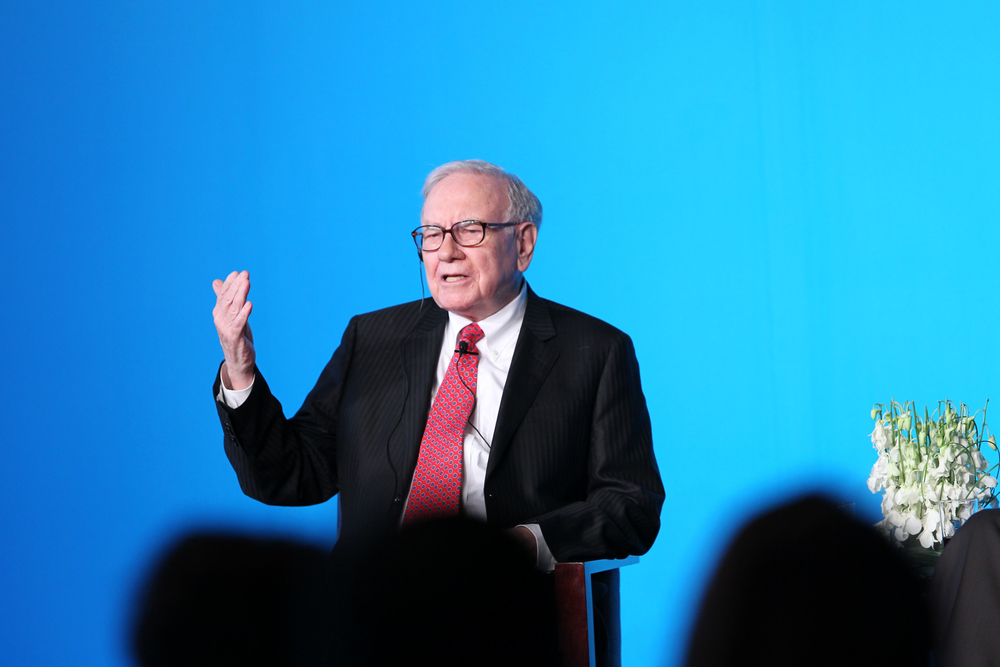
Warren Buffett is back among the richest five people in the world amid steep drops in tech stocks that are eroding the wealth of Silicon Valley executives.
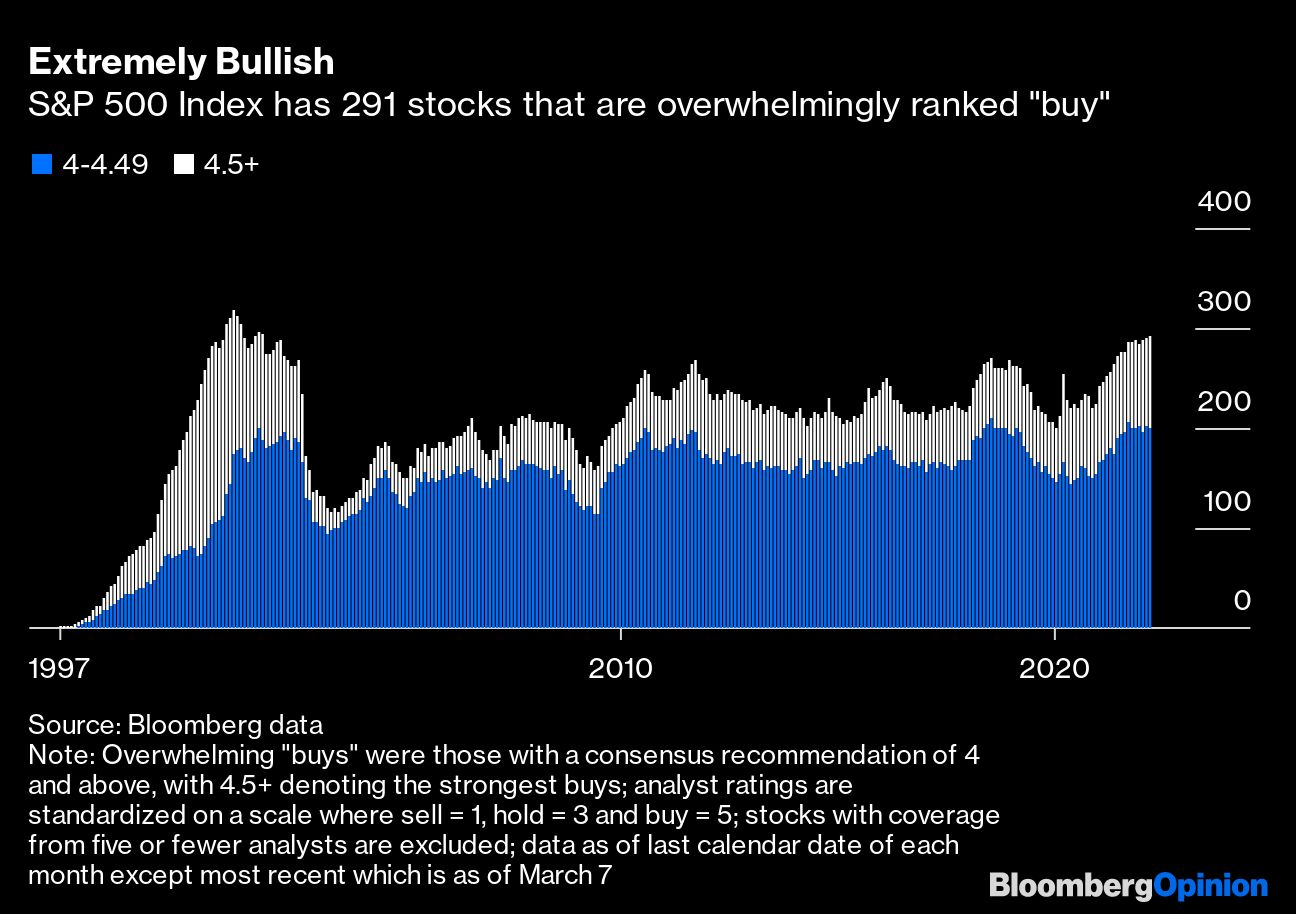
U.S. stocks slumped the most in 17 months on Monday, but the “buy the dip” mentality isn’t dead in the U.S. — and stock analysts are part of the reason it’s likely to stick around awhile. Research on individual stocks is as bullish as it has been in two decades by some measures.
If you want to know what stagflation looks like, check out the housing market. The conditions that existed during the 1970's — high inflation and stagnant output — are happening already in this segment of the U.S. economy, illustrating the challenges ahead for consumers, industry players and the Federal Reserve.
Javelin and Stinger missiles, Molotov cocktails and now…crypto war bonds. To support its life-or-death struggle against Russia, Ukraine is seeking to tap the rapidly expanding potential of cryptocurrencies. If it succeeds, other nations facing dire circumstances may follow.
Many U.S. drivers, stung by record gasoline prices, say they’d pay even more if it would end Russia’s war in Ukraine. That doesn’t mean they’re happy about it.
In a world where change is needed for growth and success, paraplanners have become a valuable resource for the financial planning profession.
As a financial planner, it’s your job to help the client understand why certain investment steps are in their best interest when their intuition may be telling them otherwise.
I am interested in any guidelines on paying and compensating my assistants.
My wife and I have downsized. We sold a large condo in a high-rise building and are moving to a much smaller house in a nearby community. The process taught me a lot about financial planning.
This article outlines the necessary requirements to establish a Nevada family trust company and examines the core features and benefits it offers clients.
Your firm would take off if you could replicate yourself. The problem: You can’t.
Advisors who avoid the TAMP space based on misguided preconceptions are missing out on the powerful competitive advantages they create.