The price of gold just had its best October in nearly half a century, defying tough resistance from surging Treasury yields and a strong U.S. dollar. The yellow metal rallied an incredible 7.3% last month to close at $1,983 an ounce, its strongest October since 1978, when it jumped 11.7%.
A cash cushion is needed not just for initial startup costs but for peace of mind as you leave your firm, move clients over and reestablish revenue.
The promise of artificial intelligence to rewire large swaths of the American economy supercharged tech shares for most of the year before the fever broke this fall. But investors would be remiss in thinking AI’s power to juice returns is over.
This article provides a brief guide to the AI technologies available (it’s not just ChatGPT), their applications in wealth management, and how your firm can define specific business outcomes to achieve.
With the end of the year rapidly approaching, it’s time again to consider tax-loss harvesting opportunities. So, it may be an opportune time for investors to consider where they can best capture potential tax benefits.
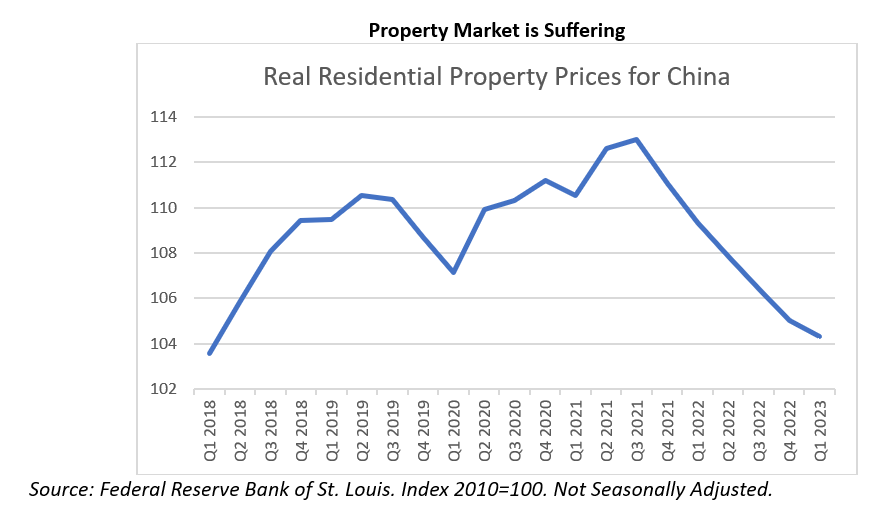
A China ‘Recovery’: How important is the loss of confidence within China itself?
With 10-year Treasury yields having retreated noticeably in recent weeks, there’s a sense that things could be turning for the better in the bond market. Should that sentiment prove accurate, it could invite renewed risk appetite in select corners of the fixed income space.
On October 24, 2022, precisely a year ago, we published an article by Allan Roth in Advisor Perspectives, The 4% Rule Just Became a Whole Lot Easier. The idea for that article came from a conversation that Allan and I had. I noted that real rates, as expressed by TIPS, were about 1.75%. I thought that it would be possible to lock in the proverbial 4% safe withdrawal rate. Allan did the analysis and found that, indeed, a 4.36% safe withdrawal rate was possible. That article received widespread attention throughout the financial media. Perhaps it even had a role in the introduction of BlackRock’s new suite of defined-maturity TIPS ETFs.
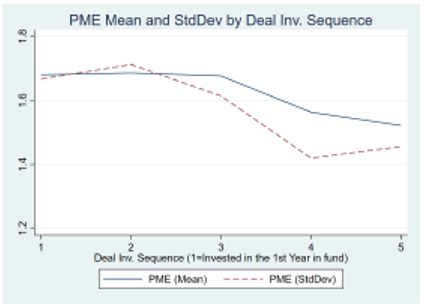
Private equity (PE) has become a staple of institutional portfolios, but its performance has often been disappointing. New research shows that the levels of specialization and portfolio diversification should be important considerations when selecting a manager to implement a PE strategy.
Worries about an economic downturn aren’t enough to dissuade market participants from being bullish on risky debt as their top contrarian trade, according to the latest Bloomberg Markets Live Pulse survey.
Starting in 2024, IBM will replace its 401(k) plan matching contributions with a new benefit earned within its overfunded DB plan, which has been frozen since 2008. This move essentially un-freezes the tech giant's DB plan.
The quality of financial advice on social media platforms such as Instagram and TikTok is up for debate. But it’s not debatable that many younger investors turn to those platforms for investing advice. They also use those platforms to voice their opinions on specific stocks.
Wall Street’s so-called Magnificent Seven has been living up to its name again, but none more so than Microsoft Corp.
The third quarter was a more favorable environment for active managers in U.S. Large and Small Caps, Japan, Australia, and Canada equities, while being more challenging for Global, Global ex-U.S., Emerging Markets, Europe, UK and Long/Short managers.
With less than two months left in 2023, this maybe another disappointing year for broad-based ex-US developed market equity funds. This includes a slew of passive exchange traded funds.
New investors are overwhelmingly choosing ETFs as their investment vehicle of choice. Between June 13 and June 28, Charles Schwab conducted a comprehensive survey of 2,200 investors for its 2023 ETFs and Beyond Study.
The doves lined up last week guiding the S&P500 up 5.85%, marking the best week of performance for the year. A busy week of data began with the quarterly refunding announcement from the Treasury.
One of the most frequently mentioned criticisms of Bitcoin mining is that it’s energy-intensive. Making that matter worse is that the industry is a massive consumer of fossil fuels, arguably inviting that criticism.
We’ve always intended for the unique collaboration between AllianceBernstein (AB) and Columbia University to serve the broader asset-management industry. Asset owners and managers alike are eager to explore the complex issues of climate change and its potential effect on investments and investment decision-making.
Topics discussed included the future of investment management and generational differences among investors as well as trends and technologies transforming the industry, including artificial intelligence (AI) and digital assets.
Rising interest rates and inflation have kept emerging markets (EM) bulls from charging. But an improving macroeconomic environment could potentially be underway after the Federal Reserve’s recent rate pause.
The bond market giveth and the bond market taketh away. The S&P 500 Index closed in the red Thursday, blowing its widely-hyped chance at a nine-day winning streak, which would have been its best run since 2004.
Exploring federal budget data is a journey through endless rabbit holes, some of which are eerily close to Alice in Wonderland insanity. Countless variables interact in unexpected ways. Seemingly small changes can cascade into billions of dollars within a few years.
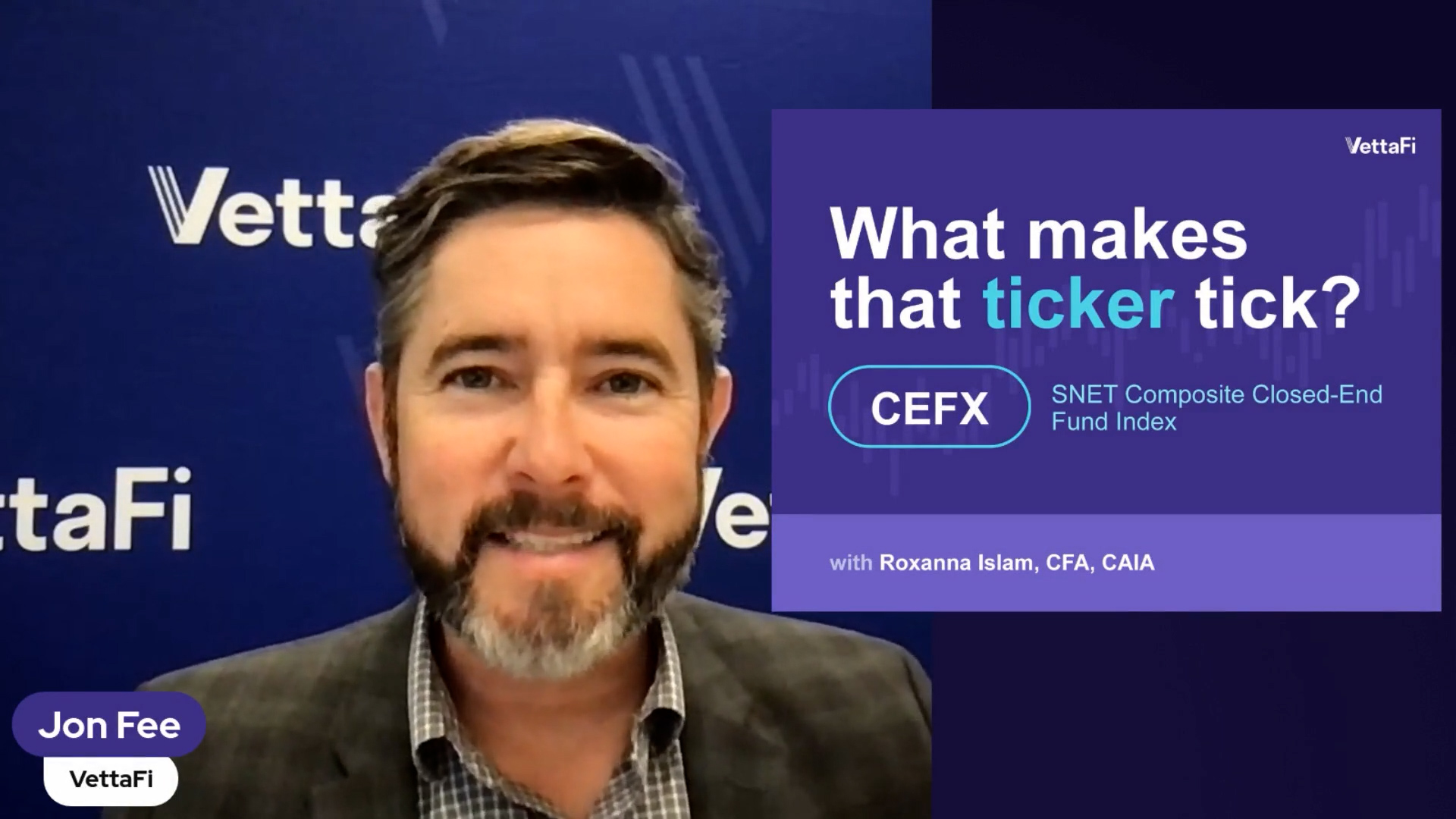
On this episode of “What Makes That Ticker Tick,” VettaFi CMO Jon Fee brought on Roxanna Islam, the Associate Director of Research at VettaFi, to discuss the SNET Composite Closed-End Fund Index (CEFX).
Our Franklin Templeton Fixed Income CIO Sonal Desai sees this market reaction as an excess of exuberance that sets the stage for more volatility. She shares her latest insights on the policy outlook and the implications for investors.
Investors should be aware of potential real-time market exposure risks when implementing large changes to their portfolios. One market hour of misaligned portfolio exposure can have a significant impact on your portfolio’s performance outcome for the year.
For this edition of Bull vs. Bear, Nick Peters-Golden and James Comtois debate whether this is truly the year active ETFs turned pretty.
Weakness in US equity markets since July reflects ongoing uncertainty about the macroeconomic outlook. Despite the concerns, stocks with quality and defensive features have performed relatively well and could help portfolios surmount shaky conditions ahead.
Read our latest insight to learn why we believe the economy isn't landing but that we see profits taking off suggesting a once-in-a-generation investment opportunity.
In this article, using data from LOGICLY, we will look at some of VanEck’s gold-related ETFs to see how the fund’s performance benefitted from the recent rally and look at how the funds have performed against the S&P 500 in the short-term and long-term.
As we head into the final stretch of quarter four and the beginning of 2024, inflation remains at the forefront of investors’ and financial advisors’ minds. With so many different narratives in the marketplace today regarding the financial market’s current outlook, it can leave many investors and advisors questioning what exactly is going on with inflation.
On this episode of the “ETF of the Week” podcast, Tom Lydon discussed the Vanguard Consumer Discretionary ETF (VCR) with Chuck Jaffe of “Money Life.” The pair discussed several topics regarding the fund to give investors a deeper understanding of the fund overall.
Whether or not you’re investing directly in China, there’s a possibility that what happens there will reverberate in your clients’ portfolios.
The S&P 500’s best week in a year was driven by investors locking in profits on bearish bets, suggesting little room for further gains, according to Citigroup Inc. strategists.
The direction of interest rates was the biggest factor moving markets in the third quarter. Sentiment on technology stocks appeared to shift. Money market assets reach historic high, but returns lag stock market.
Geopolitical factors and higher-for-longer interest rates have taken the steam out of 2023’s equities rally the past few months. But the recent rate pause could clear the path for gains in the S&P 500 for the remainder of the year.
In this period of higher interest rates, the quest to capture alpha and mitigate risk in corporate credit requires a more refined approach.
Are interest rates finally taking their bite out of the economy? Friday’s news that hiring had slowed certainly adds to the case. Markets have anticipated a slowdown and the impact of rate hikes for months now.
Several ex-Cantor Fitzgerald executives started a crypto lending platform with the expectation that it will serve operators of spot Bitcoin exchange-traded funds once they gain US regulatory approval.
Companies are rethinking office space.
For years, Americans have been giving their banking data to financial apps such as Venmo, YNAB and Rocket Mortgage. And for years, banks have been trying to figure out how to deal with the security risks. A new proposal from the Consumer Financial Protection Bureau suggests a better way.
The team responsible for assembling BlackRock Inc.’s model portfolios is favoring the stock market’s largest companies, potentially unleashing a flood of billions of dollars into technology shares.
Pay enough attention to small-cap stocks and ETFs as of late and it’s easier for even novice investors to identify at least two prominent points.
Interest rates have been rising and yields have followed the same path. So traders bullish on bonds have essentially been seeing a repeat of 2022’s weakness. However, the recent pause in rate hikes by the Federal Reserve could bring more bulls back.
Housing markets are cooling but unlikely to end in a bust.
Policy changes at the Bank of Japan could potentially reverse capital flows, shift global yields higher, contribute to a stronger yen, and increase the value of Japanese stocks.
Zacks Investment Management has been managing money for more than 30 years. It is a subsidiary of Zacks Investment Research, which is one of the largest independent research providers in the United States. In 2021, Mitch Zacks, its CEO, decided it was time to bring the research-driven approach to investing that the firm has become known for to the exchange-traded product market. The firm's first active ETF was launched in the summer of 2021. Since then, it has been focused on being committed to expanding its footprint in the ETF product space while bringing continued risk-adjusted returns to clients.
VettaFi’s Dave Nadig discusses some of the most surprising successes and failures in the world of ETFs this year. Gabelli’s Tony Bancroft, a former F/A-18 Hornet fighter pilot, spotlights the Gabelli Commercial Aerospace & Defense ETF (GCAD).
Billionaire Stan Druckenmiller isn’t letting up on his criticism of US Treasury Secretary Janet Yellen. Druckenmiller says Yellen committed an epic mistake by failing to meaningfully term out America’s debt when rates were ultra-low — a missed opportunity he’s characterized as “the biggest blunder in the history of the Treasury.”
For years, Dutch payments fintech Adyen NV’s founders and management ran things their own way, thanks to some blowout growth.