Retirement saving in a 401(k) plan requires patience and discipline. Our Mike Dullaghan explains why it’s important to automate contributions, diversify, and stay committed to your plan.
Platinum has been relatively staid for much of the year before taking flight in June, rising 36% in Q2 and leaving other metals in the dust.
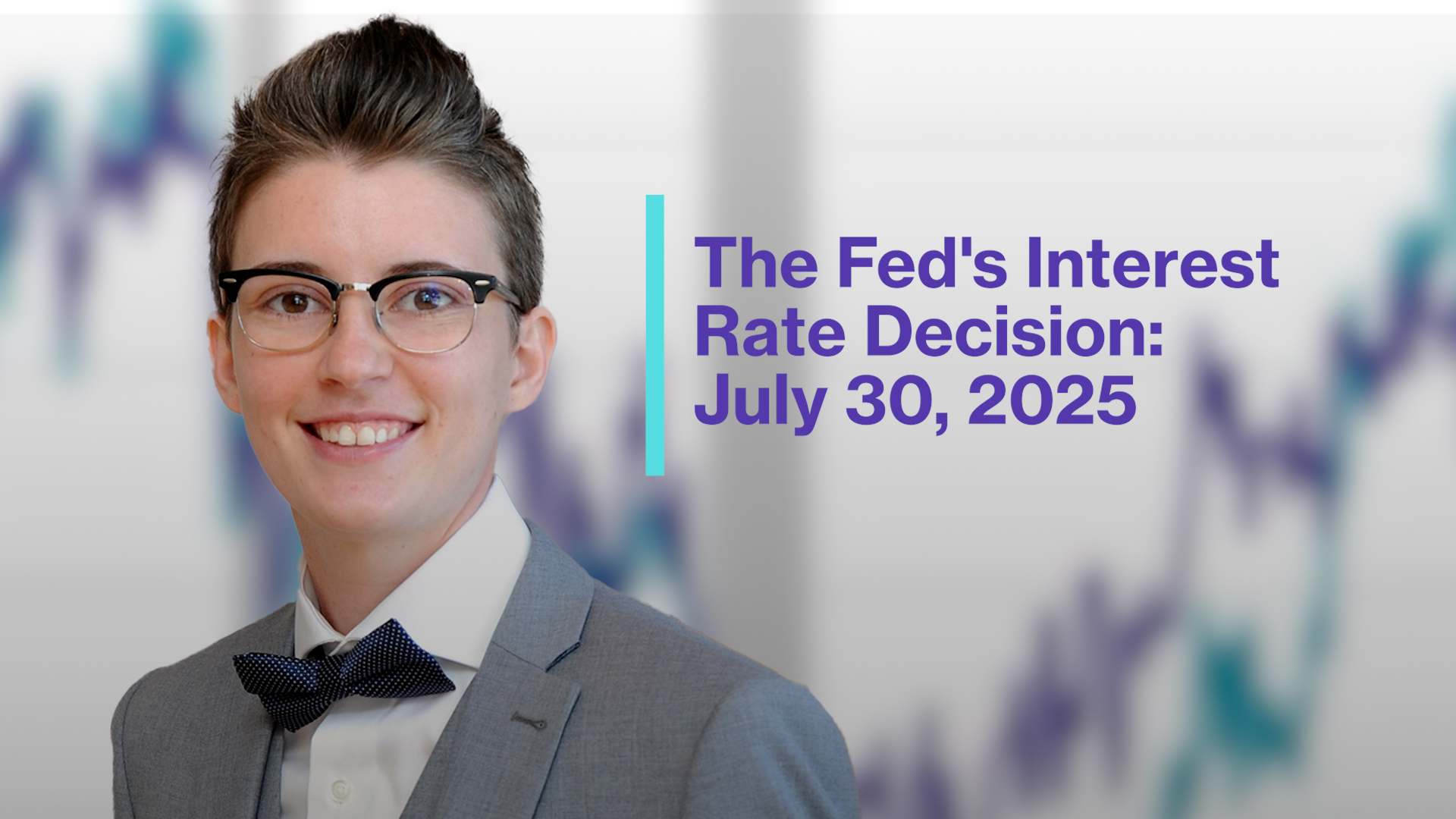
The Federal Funds Rate (FFR) is the interest rate banks charge each other to borrow money overnight. It's set by the FOMC and is one of the Federal Reserve's primary tools to implement monetary policy and is a key driver of economic activity. This video examines the Federal Funds Rate and reviews the Fed's interest rate meeting on July 30, 2025.
This week’s column is devoted to the advisors over the years who have shared stories with me that have stuck with me. These anecdotes have reminded me we can’t take anything for granted and being safe is better than sorry.
Meeting AI is no longer a nice-to-have — it’s become a core part of the advisor tech stack almost overnight.
A good RIA will focus on the “mechanical” parts of post-M&A integration. But great RIAs will pay just as much attention to the human side of integration.
US buyers have been coming for the UK’s top companies, and now they are coming for its bankers. You can see why London-based boutique Robey Warshaw is selling itself. For New York-based buyer Evercore Inc., it’s more a calculated gamble.
China’s current AI frenzy represents the best and worst of classic capitalism: The competition propels innovation at a rapid clip, but not all of the companies will survive over the next five or 10 years.
Instead, a new group dubbed the “Terrific 20” — spanning real-economy sectors like financials, energy, industrials, and consumer — has led the rerating. Their forward valuations have risen ~50% in two years, making a larger portion of the market look expensive.
Coders who use artificial intelligence to help them write software are facing a growing problem, and Amazon.com Inc. is the latest company to fall victim.
Constant threats are souring U.S. relations with its trading partners. Stop-gap deals of the kind agreed recently will not mark the end of the trade war, as the pacts leave high tariffs in place.
The U.S. economy is still proving resilient despite global tensions and trade barriers. The news of a 15% EU deal is very encouraging, and there were few other restrictions in the preliminary agreement.
With the August 1 trade deadline fast approaching, America’s trading partners are racing to finalize agreements in hopes of securing more favorable terms before the higher tariffs announced by President Trump take effect.
US equities underperformed global markets in the first six months of 2025, but continue to trade at a premium to foreign markets. ClearBridge Investments outlines the case for global diversification.
Senior Investment Strategist Tracey Manzi notes that while sentiment shifts can sway markets in the short-term, the US dollar's supremacy will likely remain intact.
Our research suggests that firms with sound executive pay practices yield healthier returns.
The past week was a significant moment for the crypto landscape, both in terms of legislation and market momentum.
Much has been made about the current state of affairs of the U.S. dollar. The greenback’s slump in 2025’s first six months is the currency’s worst first-half showing in 52 years. That’s more than enough to sound alarm bells in the global currency market.
When markets decline—especially after long periods of sustained growth—the familiar advice resurfaces: “Be patient. Stay invested. Ride it out.” The rationale? The market always goes up over time. But there’s a critical flaw in this narrative.
UnitedHealth Group Inc. tumbled after warning its annual profit would be hit harder than Wall Street was expecting, the latest in a series of disappointments from an insurer once known for its reliable growth and predictability.
Whether the White House “won” its trade negotiations with the European Union is debatable: Americans will now pay more for French wine and German cars, while Europeans get a tax cut on US goods.
In the latest edition of Market Week in Review, Senior Investment Strategist and Head of Canadian Strategy, BeiChen Lin, unpacks the European Central Bank’s (ECB) latest policy decision, provides an update on U.S. trade negotiations ahead of the August 1 deadline, and previews next week’s interest rate decisions from the Federal Reserve and Bank of Canada (BoC).
Given short-term and long-term price implications, the growth trajectory for copper could be electrifying. The industrial metal’s usage in electricity is giving way to its ubiquity.
Bob Elliott, Co-Founder and CEO of Unlimited, highlights the value of hedge fund strategies and how his firm is making them more accessible through innovative hedge fund replication ETFs. Todd Rosenbluth, Head of Research at VettaFi, breaks down the latest ETF headlines – from Invesco’s plans to restructure QQQ, to Global X’s launch of “PureCap” ETFs, new covered call sector ETFs from State Street, and growing investor interest in momentum ETFs.
Most sales conversations fail because they’re built on outdated tactics that create pressure instead of connection.
Join the experts from MUSQ, LLC and VettaFi as they discuss a first to market ETF with broad exposure to a rapidly growing industry.
There’s a movement underway to improve retirement investments through personalization, but it will do more harm than good in the next stock market crash because it uses the wrong information for defaulted participants.
Integrating tax expertise into your practice not only mitigates this risk but also transforms the way you serve your clients. Here are three compelling reasons to partner with a tax firm this year.
Some 15 Super Bowls ago, Chrysler wowed the viewing public with a long car commercial starring Eminem that featured the tagline “Imported From Detroit”.
Trying to do too much without a focused strategy reaps negligible results over time — it also causes burnout.
President Trump announced higher tariffs were on the way almost as soon as he took office. As a result, businesses focused on buying foreign goods in advance, to front run those tariffs, putting some of their purchases from domestic producers on the backburner.
If there’s one thing I’ve learned after decades in the investment world, it’s that government policy is a precursor to change.
The ability of the US economy to avoid a recession in 2022-2023 rested, in part, on the resilience of non-residential investment, which was propped up by a strong private investment push from companies taking advantage of provisions in both the CHIPS Act as well as the IRA.
US Congress passing the GENIUS Act paves the way for stablecoins to move from niche to mainstream.
With inflation still eating away at fixed-income returns and threatening the once-reliable stock/bond inverse correlation, it may be time to take another look at adding gold fixed-income offerings to portfolios.
We believe several forces—tariffs that weigh on U.S. household income, shifts in fiscal and economic policy abroad, and evolving macroeconomic conditions—could compress growth differentials between the United States, Europe, Japan, and China.
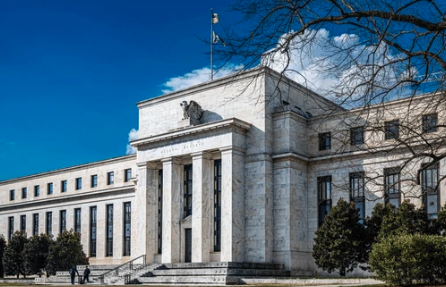
The Marriner Eccles Building, home to the Federal Reserve Board, is an imposing structure that fronts the National Mall in Washington D.C. It was constructed in the wake of the Banking Act of 1935, which created clear separation between the Treasury Department and the central bank.
There’s a daily onslaught of AI headlines and often tantalizing intraday moves notched by some related stocks. Some investors are tempted to take short-term views of the artificial intelligence investment thesis.
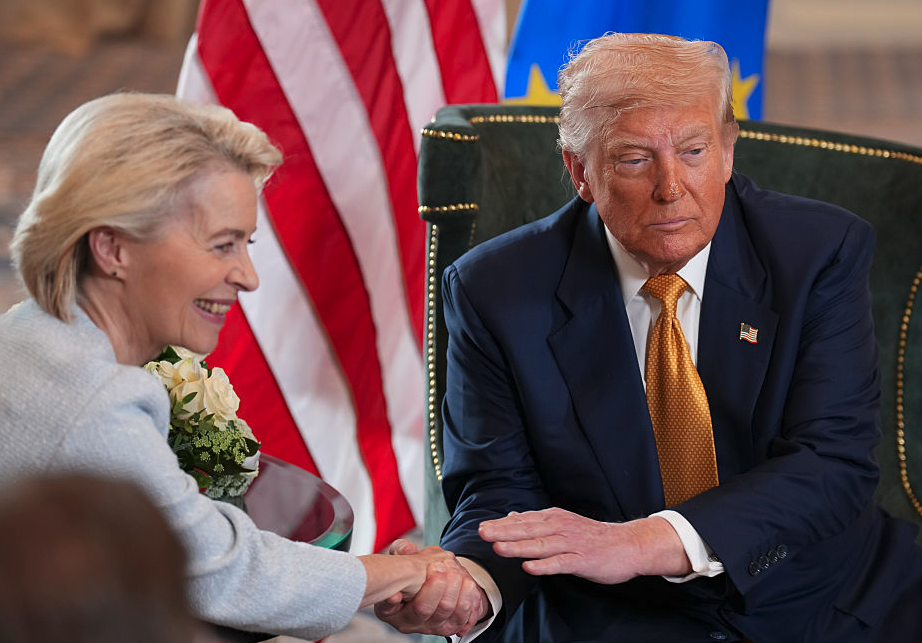
Donald Trump’s world tour of arm-twisting on trade has landed its latest deal: A 15% baseline tariff on European Union goods, lowered from the recently threatened 30%, in return for an apparent smorgasbord of continental investments into the US and huge purchases of energy and military equipment.
With 2 billion monthly users in 200 countries, Google’s AI Overviews can claim to be the most popular generative artificial-intelligence product yet released to the public.
A challenging housing market is pulling builders away from metros they’ve long favored to smaller cities, where it’s easier to construct the kinds of homes Americans can afford.
The 2025 bitcoin bullishness has stirred much chatter about why the largest cryptocurrency is one of this year’s best-performing assets.
VettaFi’s Head of Research Todd Rosenbluth discussed the Franklin International Low Volatility High Dividend Index ETF (LVHI) on this week’s “ETF of the Week” podcast with Chuck Jaffe of “Money Life.”
When it comes to investing, I’ve learned that common sense isn’t all that common. In fact, I’ve seen brilliant people lose millions of dollars on investments without using one ounce of common sense.
AI is rapidly increasing the speed and accuracy needed for financial market research and trade execution.
“Everyone knows” falling interest rates are good and rising interest rates are bad for bond investors. But “everyone” is generally wrong.
The outcomes resulting from headline items in 2025, such as inflation, monetary policy, and tariffs, remain unknown. However, staying disciplined and following a plan through a robust asset allocation is key.
One idea unites the left and right lately: a zero-sum view of the world. Unfortunately, nice as it would be to hail a rare instance of ideological harmony, both sides are very much mistaken.
The world’s hottest postcode for oil exploration is Namibia, attracting a who’s who of the petroleum industry.