This week I had the chance to run a half-day workshop helping seasoned, successful advisors learn techniques for emerging as strong leaders, so I’ll share some of the information here in this column.
In this edition, Harold Evensky explores the challenges facing sustainable and active funds, the implications of the new DOL Fiduciary Rule, and the value of long-term performance projections. With candid observations and critical analysis--read on to gain perspective on navigating the complex world of investing, the importance of risk management, and the role of fiduciary advisors in securing your financial future.
Equity bulls looking for signs of relief after Tuesday’s stock rout may get a hand from a familiar friend: corporate America.
Bond traders are bracing for wilder market swings in the US than in Europe, as signs the world’s largest economy is faltering fuel bets on a jumbo interest-rate cut from the Federal Reserve.
The sharp selloff that wiped a record $279 billion off Nvidia Corp.’s market value on Tuesday has traders scouring charts for clues as to where the pain might end.
A record number of blue-chip firms swarmed the US corporate bond market on Tuesday, taking advantage of cheaper borrowing costs as they look to issue debt ahead of the US presidential election.
The case for infrastructure investment is rising, but so are its costs.
A soft landing for the U.S. economy still appears to be the most likely outcome.
With his Jackson Hole speech, Federal Reserve Chair Jerome Powell all but promised rate cuts were coming. That’s cool. But it is why that matters.
ERShares Founder Joel Shulman goes in-depth on what’s being called the first ever private-public crossover ETF, the appropriately named Entrepreneur Private-Public Crossover ETF (XOVR). VettaFi’s Todd Rosenbluth discusses Nvidia from an ETF angle, highlighting products with varying exposure to the high-flying stock.
You did everything by the book. Your prospect talked and you listened. But listening alone is not enough to build trust.
Few human activities are more central to historiography than war, and yet historians are poorly equipped to understand its evolutionary and psychological roots: Why War? attempts, with only partial success, to close this gap.
Half your coworkers might have just spent August in Europe, but there were no holiday doldrums in the booming world of ETFs.
It’s the story of so many stock market manias: A transformative technology juices a few companies, a bunch of more questionable outfits follow in their wake, and Wall Street buys it all. Then time sorts out what’s real from fake.
Apple Inc.’s upcoming iPhone release has sent its stock price soaring because of promised artificial-intelligence features. Those gains appear vulnerable, at least in the short term, if history is any guide.
Since the pandemic, Wall Street strategists have repeatedly underestimated the performance of the US stock market in their annual projections, leading to a mad dash to boost their outlooks in the back end of the year.
What’s the point of Keir Starmer’s massive electoral majority if he remains hesitant to do something for young people on Brexit that’s not just compassionate and sensible, but also very popular?
After a bit of an early-August swoon, the stock market came roaring back in the last few weeks of the month. The S&P 500 finished up 2.4%, though certainly in the early days of August, that did not feel like a particularly likely outcome. In client conversations a few days into the selloff, our feeling was to stay put and not tinker with the portfolios we suggested in early August.
In our view, stagflation scenarios tend to be worse for balanced portfolios than recessions.
This week saw a nontech giant cross a unique milestone and a tech giant’s earnings report become a Mainstreet sensation.
As noted in this past weekend’s newsletter, following the “Yen Carry Trade” blowup just three weeks ago, the market has quickly reverted to more extreme short-term overbought conditions.
I asked my great friend and business partner David Bahnsen, who is about as politically wired as anyone and one of the truly great economic and investment minds, to reflect on the intersection of politics and markets. It is a quick, balanced, and reasonable read...
As I write this, gold continues to trade above $2,500 an ounce after surging past the psychologically important level for the first time ever in mid-August. For seasoned gold mining investors, this should be a moment of validation. After all, the yellow metal has long been seen as the ultimate hedge against economic uncertainty.
The forthcoming presidential election is certainly adding a healthy dose of intrigue into the municipal bond space.
Has the tide turned decisively against King Dollar? A fall of around 5% in the greenback versus major currencies in the past two months, pushing the dollar index to a 13-month low, suggests its post-pandemic surge has meaningfully faltered.
The Federal Reserve’s preferred measure of underlying US inflation rose at a mild pace and household spending picked up in July, reinforcing policymakers’ plan to start cutting interest rates next month.
The US economic data released in early August not only triggered a brief, but dramatic episode of financial-market volatility. It also fueled an abnormal degree of instability in forecasts by leading Wall Street economists, suggesting that they, like the Federal Reserve, may have lost their strategic bearings.
Copper has been trending lower since the middle of May, but supply disruptions in Latin America could help reverse that trend.
As tax season draws nearer, advisors and investors increasingly look to their portfolio to optimize exposures for taxation purposes.
When you see that behavior at extreme valuations, it tends to be a sign of underlying skittishness and risk aversion. When valuations are setting record extremes because the news can’t get any better, even a slightly less optimistic outlook becomes a risk.
China's economic transformation presents both challenges and opportunities for global markets.
Forecasting anything, let alone something as complicated as the economy, is fraught. Stretches of decent growth and low inflation that look, in retrospect, like happy days, can be upended by unforeseen events. Covid, the descent into recession and the sharp rebound are just a few examples. Errors, unfortunately, are an unavoidable part of trying to map the future.
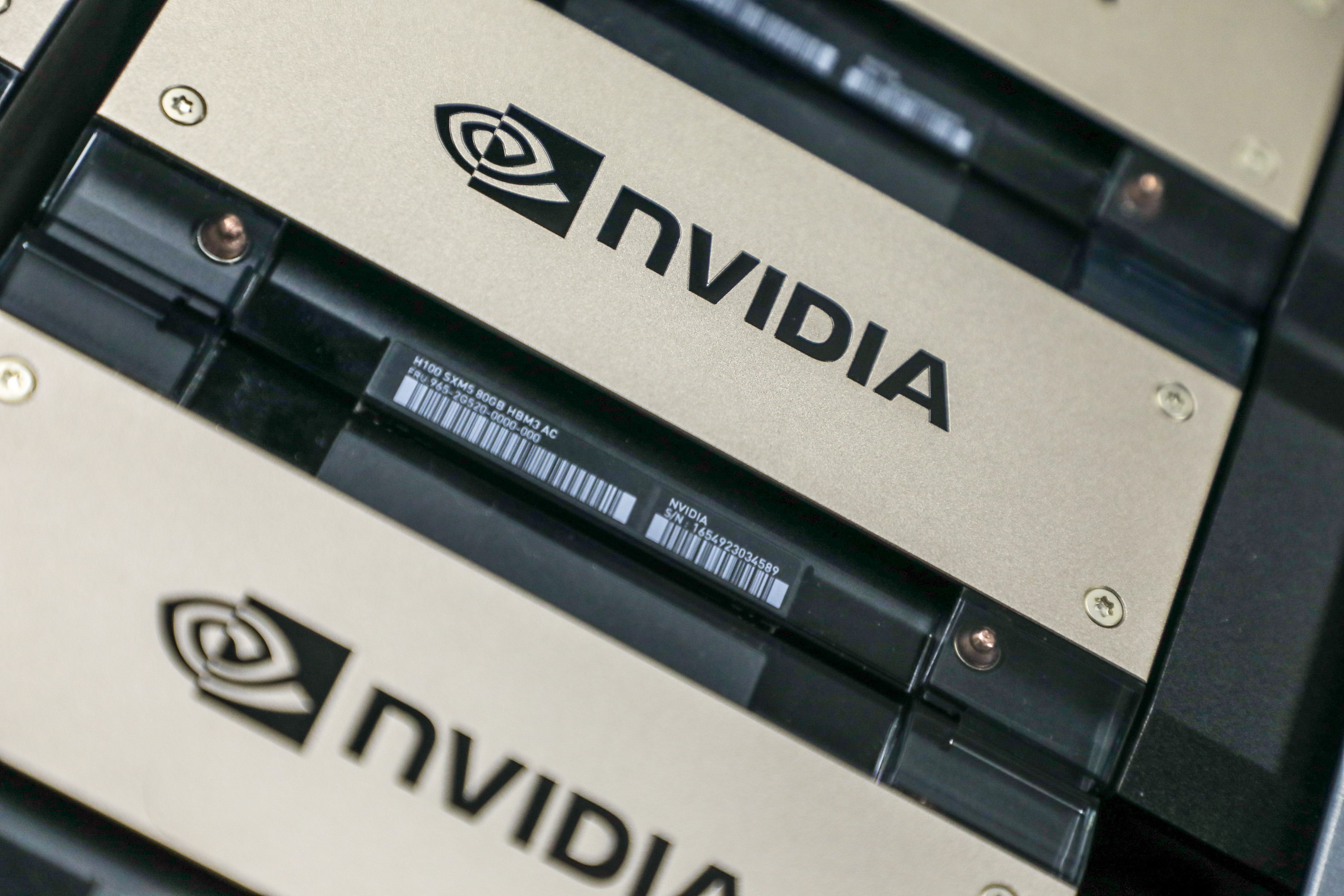
There’s an adage in Silicon Valley: Hardware is hard. And expensive. And time-consuming. That’s the case even when you’re a company that’s really good at it — like Nvidia Corp., whose market value has grown to $3 trillion thanks to its extraordinary prowess in the trickiest hardware challenge today: building cutting-edge chips for artificial intelligence.
Nvidia Corp., the world’s biggest chipmaker, has discussed joining a funding round for OpenAI that would value the artificial intelligence startup at more than $100 billion, according to people familiar with the matter.
The late Jack Bogle — father of the first index fund — famously loathed their exchange-traded offspring, warning that it only incentivize speculative trading among “fruitcakes, nut cases and lunatic fringe.” Fast forward to 2024, and critics warn a new generation of ETFs are designed to do exactly that.
Many recent studies have been done on the economics of different generations. Researchers want to know if Millennials and Gen Z are in fact worse off than their Boomer and Gen X parents. There are quite a few ways to look at this data.
When global equity markets tumbled in early August, investors got a glimpse of what a deeper correction could like for the US giants, and it wasn’t pretty. The so-called Magnificent Seven have dominated US and global equity market returns since late 2022—and valuations have soared—as earnings growth rebounded and on expectations that they will be the big winners from artificial intelligence (AI).
The path for lower rates in the U.S. has finally arrived.
The “Sahm Rule,” a widely used metric for determining the early stages of recession, was triggered in July.
Rules are made to be broken, so I would call this a 50 percent starting place in your discussion with the client. I certainly wouldn’t recommend only a 50 percent equity portfolio to a young client with a high willingness and need to take risk or the same to any client who had a low willingness and need to take risk.
If your home and/or its contents are destroyed or damaged by a disaster such as a fire or flood, the insurance company will need a complete list of what was lost. Do you have such a list?
Chair Jerome Powell cemented a shift in focus from inflation to employment last week when he said that the Federal Reserve does not seek a further cooling in the labor market. It was a welcome message for those concerned about an economic slowdown. But there are reasons to expect today’s sluggish hiring environment to persist at least into early next year, frustrating job seekers and policymakers alike.
Nvidia Corp.’s earnings report needed to be perfect for a stock that’s added nearly $2 trillion in market value in the past year. In the end, a broad beat still sparked a selloff.
Nvidia Corp.’s earnings report was impressive by virtually any metric — except its own recent history.
Nvidia Corp. failed to live up to investor hopes with its latest results on Wednesday, delivering an underwhelming forecast and news of production snags with its much-awaited Blackwell chips.
In an election year, we are bound to hear a lot of commentary about the merits and drawbacks of both major candidates’ economic policies. History shows that while a president’s policies can make life easier or more difficult for various sectors of the economy, U.S. Federal Reserve (Fed) policy has much more impact on the economy overall.
The healthcare sector offers a compelling mix of defensive characteristics and growth potential driven by innovation. It also features ample dispersion that presents stock pickers with an opportunity to parse potential leaders and laggards in pursuit of above-market return.
High-yield bonds have been one of the best-performing bond investments so far this year, but there may be better entry points down the road.
The Big Tech boom is causing headaches for all-powerful index providers on Wall Street, who can send billions of benchmark-tracking dollars on the move with just a stroke of the pen.
Berkshire Hathaway Inc. became the first US company outside of the tech sector to surpass $1 trillion in market value.