It’s no surprise, then, that the majority of your marketing efforts are probably geared toward digital viewers. Here’s why print marketing is still worth your time and attention in a digital world, along with six print pieces to focus on first.
The article from the Wall Street Journal titled “Why My Generation Is Turning to Financial Nihilism” by Kyla Scanlon argues that Gen Z is embracing high-risk financial behavior out of despair and detachment, but the data shows something very different.
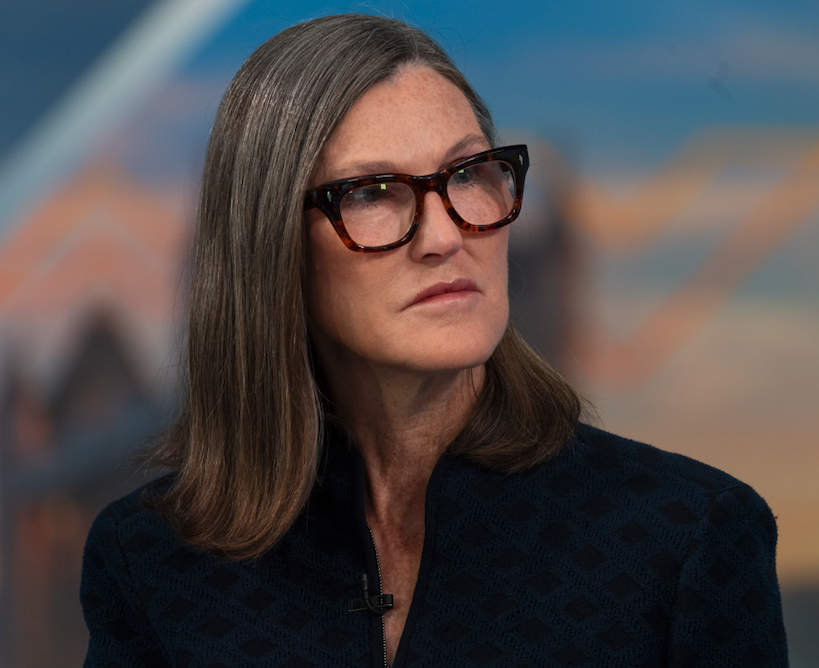
Years after Cathie Wood became the face of pandemic-era investing euphoria, her flagship fund is marking a difficult milestone.
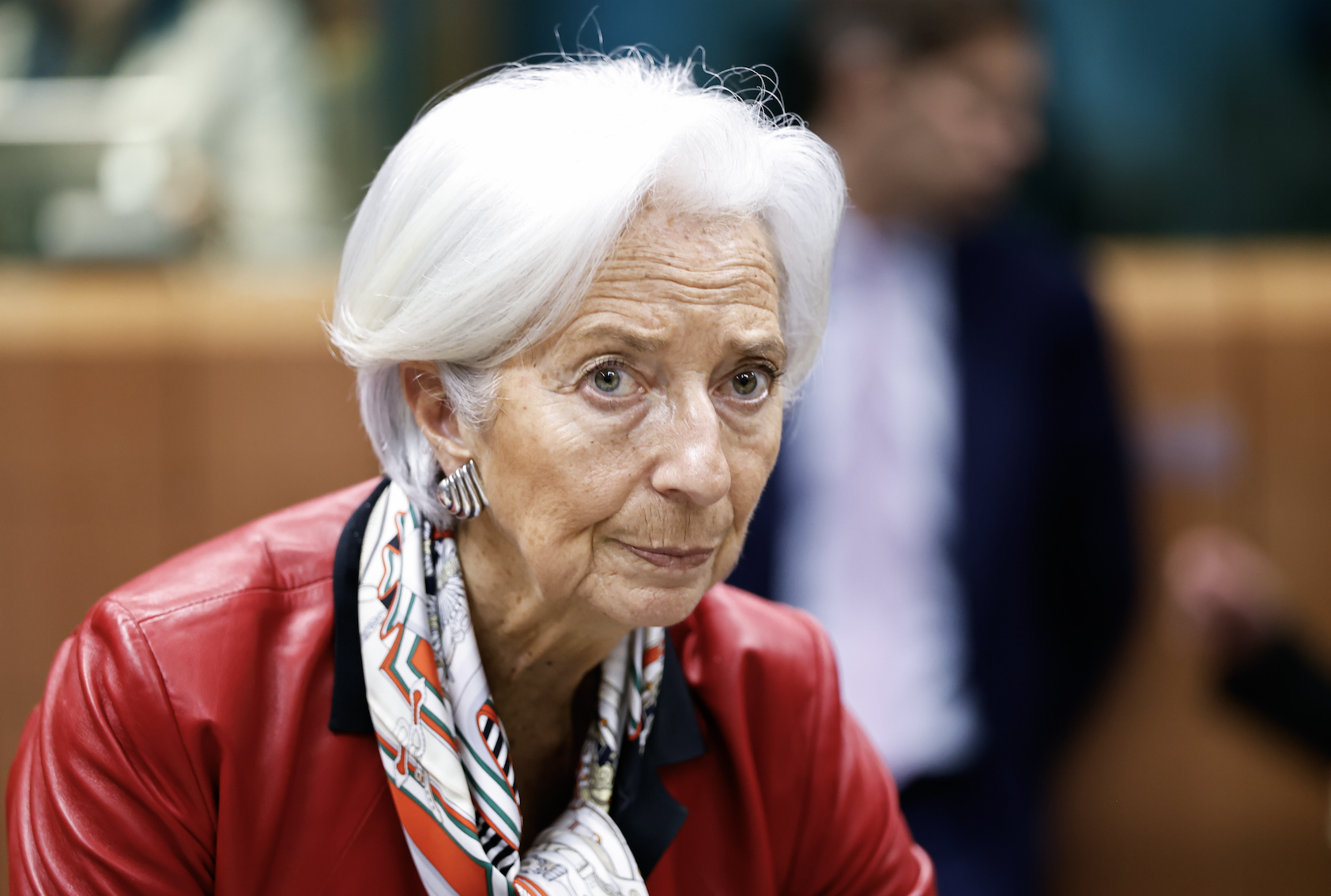
An early departure by Christine Lagarde could narrow the field of candidates vying to succeed her as European Central Bank president.
Artificial intelligence fears have ripped through stock and bond markets, but investors in loans and private credit are still playing catch-up.
If inquisitive investors wanted to measure the demand for AI with some actual numbers, one place they might look on the balance sheet is the line reading “remaining performance obligations,” known more simply as the backlog.
Markets move through phases of resilience, shifting leadership and renewed opportunity. We’ve seen this play out in recent months as performance has broadened beyond mega‑cap tech into areas that had long been overlooked.
Four months ago, digital assets underwent what I believe was the most consequential liquidation event in their history. On October 10, 2025, over $19 billion in leveraged positions were wiped out within hours. Bitcoin plummeted from roughly $122,000 to $105,000. More than 1.6 million trader accounts were liquidated.
For families navigating public benefits, long-term care planning, and lifetime financial sustainability, this change represents both an opportunity and a planning strategy worth considering. While ABLE accounts can be powerful tools, they are most effective when coordinated thoughtfully with benefits, trusts, and broader financial strategies.
Artificial intelligence is a genuinely useful technology, but its impact will be uneven, gradual and impossible to predict. That’s the boring truth, however unlikely it is to go viral.
Browsing real-estate listings is a popular hobby. Home data portals provide hours of free entertainment. Some listings feature bizarre or ostentatious decoration; some are time capsules, preserving a bygone era. Most entries share one shocking feature: the price.
When uncertainty rises, volatility usually follows as the market has a tendency of pricing in worst-case scenarios quickly. AI’s evolution has accelerated rapidly, shifting from novelty use cases to broad, productivity‑enhancing applications across industries.
Last week delivered exactly what the market needed on the economic data front: confirmation that inflation continues to cool while the labor market remains firmly intact. The CPI came in softer than expected, finally reflecting the long-awaited deceleration in rental costs.
We’ve seen upper-income consumers power consumption growth over the past year even as middle-income and working-class households become more restrained. The message from the office market is starting to sound similar.
Stripping out more volatile food and energy prices, core CPI prices rose 0.3 percent month on month. The annual core CPI dropped from 2.6 percent in December to 2.5 percent, the lowest reading since April 2021.
Gold has always been one of the go-to assets when stomach-churning volatility forces queasy investors into safe havens. However, recent volatility has been challenging that safe haven narrative, and one of the drivers has been speculative trading activity in China ETFs.
The performance of digital assets in recent months, especially bitcoin, has been testing investor conviction in both the category’s near-term growth potential as well as bitcoin’s standing as a gold-like store of value and a key character in the debasement trade story.
Join the experts at SS&C ALPS Advisors as they explore an actively managed approach to REIT investing.
Advisors can foster a stronger relationship with their clients through providing advice over charitable giving.
Before making a Roth conversion, always work with your advisor and consider the importance of timing and taxes to get the most out of the conversion. Just like Dr. Dre, you may need to make some charitable deductions to decrease your tax bill.
Nobody doubts the potential of machine learning. For portfolio managers, the question is not whether it works in theory; they know it does. The question is whether the expense fits their business size and goals.
Early last year, the drama around tariffs dominated news headlines, market predictions, and interactions between the U.S. and our allies. Yet for most Americans, daily life went on with little obvious impact on prices for goods. At least not right away.
Today we’re going to look at the recent employment data, and begin our exploration of what it will be like to be in the midst of a paradigm shift, on top of all of the other changes in society and finance. Without trying to be cliché, it is part and parcel of The Fourth Turning.
Since the beginning of the year, we have discussed the “reflation trade” and its impact on specific market sectors. This past weekend’s newsletter also showed some of these more extreme returns in various market sectors since the beginning of the yea
Fourth-quarter earnings results have been generally solid so far, albeit a bit weaker relative to prior quarters when it comes to beat rates and price reactions. On the international front, weakening global ties may lead to economic disruption and lasting investment implications. Meanwhile, bond market volatility has remained low despite economic and policy uncertainty.
Investors are avoiding beaten-down software stocks, warning that the brutal selloff triggered by fears of displacement by artificial intelligence is likely only just beginning.
Emerging-market assets were little changed on Tuesday as traders weighed the recent optimism toward the asset class against a firmer US dollar and thinner trading volumes due to holidays in major markets.
Treasuries rose on Tuesday as investors bet on the Federal Reserve cutting interest rates at least twice this year and jitters over global technology shares boosted demand for safer assets.
Adani Group plans to invest $100 billion by 2035 to develop green-powered, AI-ready data centers as billionaire Gautam Adani seeks to capitalize on India’s bid to emerge as a hub for artificial intelligence and cloud computing.
Thrive Capital, the venture capital firm founded by Josh Kushner, has raised more than $10 billion — its largest fund ever, giving the firm an expanded war chest to invest in areas ranging from artificial intelligence applications and infrastructure to space, robotics and life sciences.
Volatility was once again the theme in US markets last week as a profound alpha rotation reshapes Wall Street. Investors continued to flee mega-cap tech, software stocks, and anything considered an AI loser, in favor of more cyclical sectors such as energy, materials and industrials.
As of February 10, 2026, Victory Capital managed $20 billion in ETF assets, with an impressive $9 billion of new money flowing in during the past 12 months.
A weaker dollar, renewed commodity strength, and rising sensitivity around AI valuations are reshaping market leadership. Paul Vella breaks down what’s fueling gold and emerging markets, why SaaS cracks matter, and how disciplined diversification is helping investors navigate policy and earnings uncertainty.
The Dow Jones Industrial Average, better known as “the Dow,” closed above 50,000 points for the first time. It’s a historic milestone that comes less than two years after surpassing 40,000 in May 2024, but what does the milestone mean, and does it signal time for investors to reduce exposure?
Gold demand in the tech and industrial sectors was generally flat at 222.8 tonnes in 2025. This was down about 1.5 percent from 226.2 tonnes the previous year.
Diversification seeks to help manage risk, smooth portfolio outcomes, and improve the likelihood that clients stay invested and on track toward their long-term goals.
A financial innovation brings new insights and new risks.
The U.S. economy began 2026 with a display of unexpected resilience in the labor market and cooling inflation.
Small caps are back in the spotlight! In this episode of ETF of the Week, Chuck Jaffe sits down with Todd Rosenbluth, Head of Research at VettaFi, to revisit a "new-fangled" fund that has quickly gained traction: the NEOS Russell 2000 High Income ETF (IWMI).
Capital markets have faced quite an array of moving pieces over the last couple of weeks, ranging from equity market rotation dynamics, volatile metals and commodity price action, geopolitical flare-ups, global central bank decisions, and high-profile earnings.
The silver market is projected to run its sixth straight structural supply deficit in 2026 as investment demand remains high.
Gavekal CEO Louis Gave is one of my favorite people to speak with on anything related to portfolio construction and the non-US perspective, and I knew our latest conversation about emerging markets (EM) would be anything but conventional.
Private credit has been in the news lately. That’s nothing new. For years, investors have read about the potential opportunities the asset class offers and how it works. Let’s dig a little deeper into what private credit is, what it isn’t and how it can fit into a diversified investment portfolio.
There is perhaps no market force more fearsome than a true short squeeze. In our increasingly digitized financial world, a perilous gap often emerges between “paper” positions and physical reality.
Despite having little expertise when it comes to the subject of happiness, I’m fascinated by the subject of money and happiness. In this article, I discuss my own failed experience, review research on money and happiness, and offer my hypothesis on investing and happiness.
Before turning your investment perspective upside down, let’s define how most investors think about value and growth stocks. For some reason, investors often assume that growth and value are mutually exclusive. They are not, as we will explain.
To make alternative investments appear attractive, promoters often claim that their products are only weakly correlated — or even uncorrelated — with traditional investments, while still offering competitive returns.
Move over, Taylor and Travis. This Valentine’s Day, the real power couple financial advisors should be swooning over is the one between their wealth practice and the retirement market.
In this article, Russ Koesterich discusses the merits of continuing to hold tech companies while also exploring diversification outside of the sector.
Big Tech keeps raising its spending plans for artificial intelligence infrastructure, yet shares of Nvidia Corp., one of the biggest beneficiaries of that flood of cash, have been largely stagnant for months.