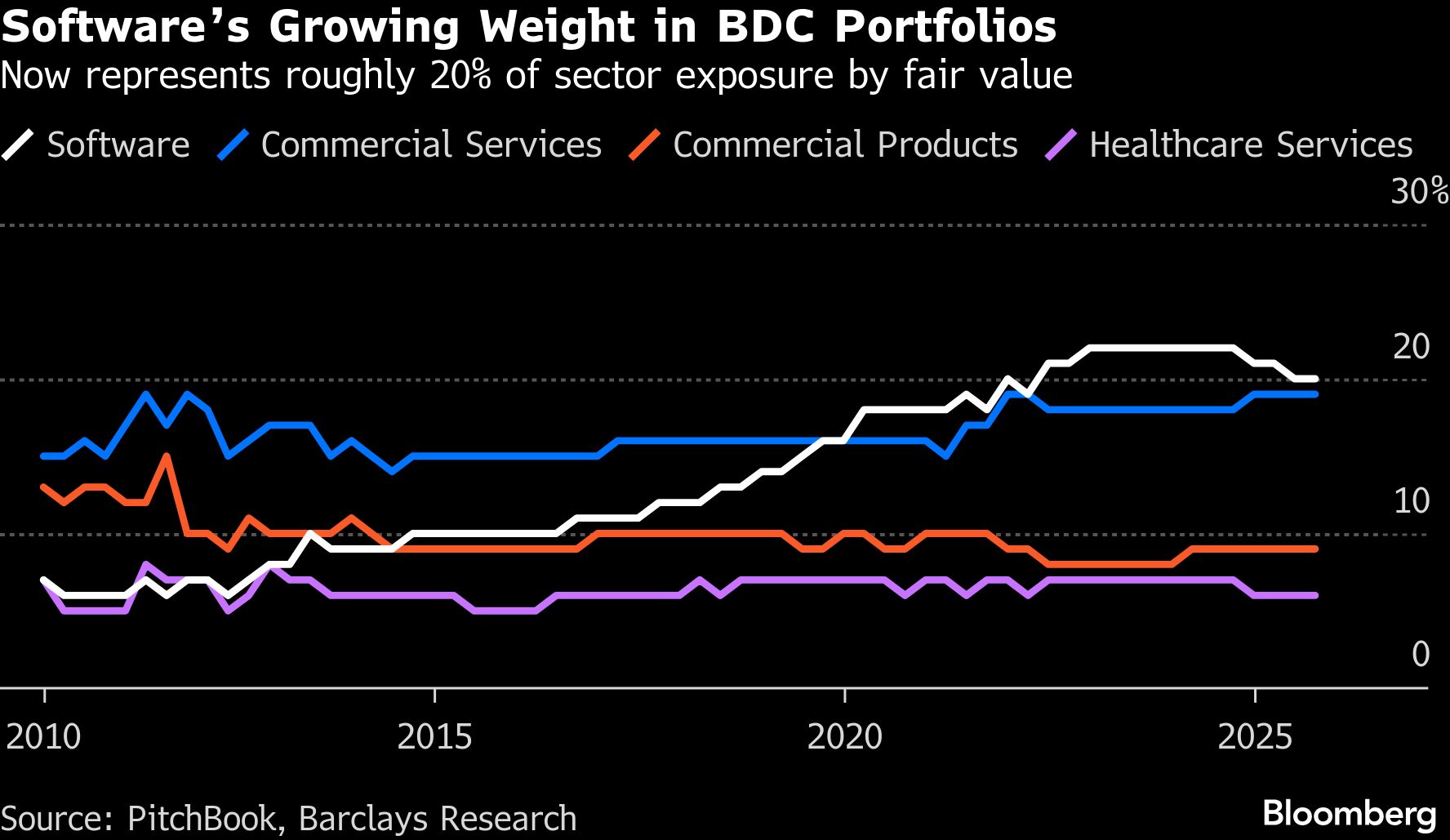
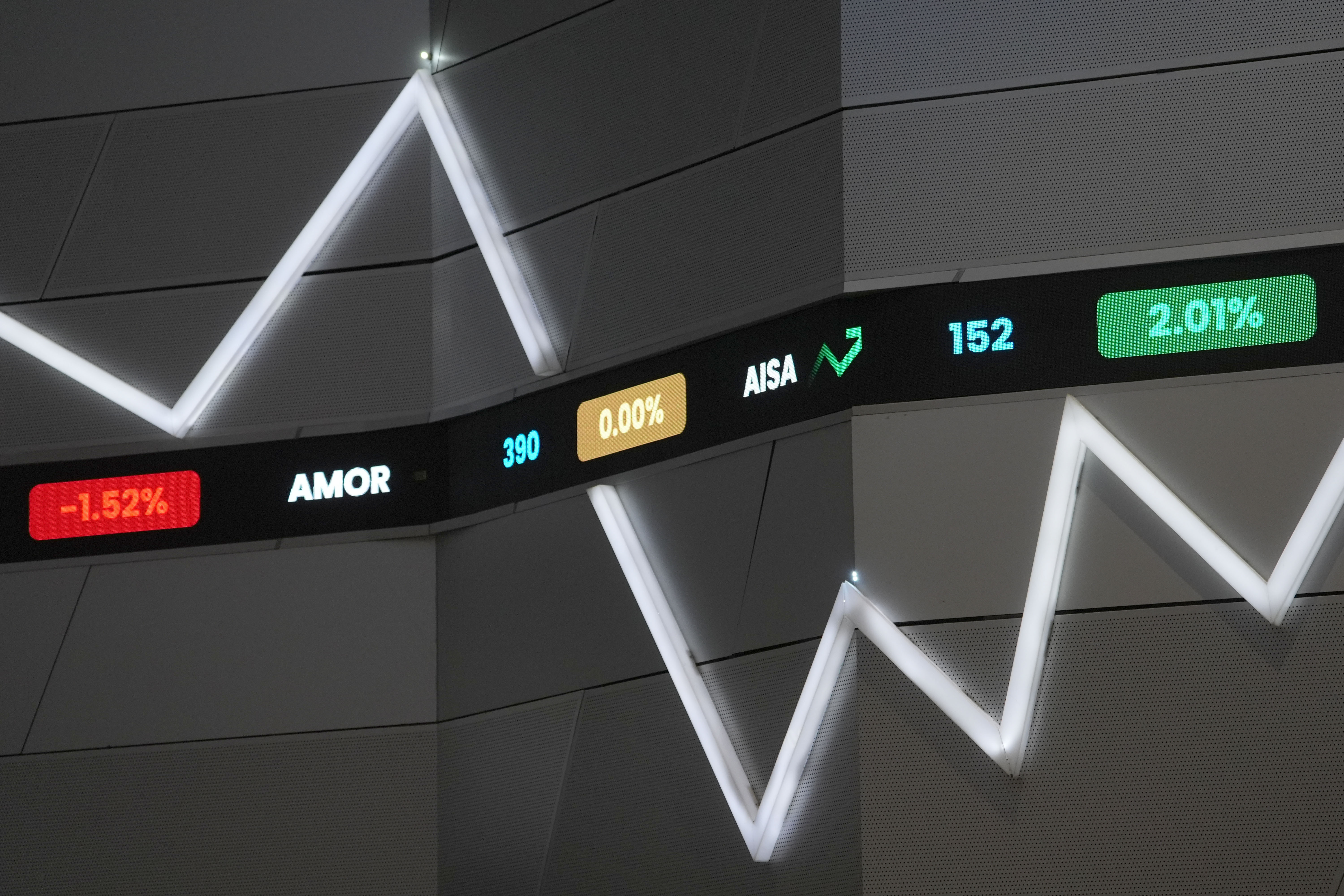
And so it goes in the world of private credit. Time and again, companies widely regarded as software firms are frequently labeled otherwise by lenders, a practice that raises fresh questions over the full extent of their exposure as the threat from artificial intelligence upends markets and rattles investors.
At their most recent meeting, the Federal Reserve and Chair Powell told us that the risks of weakening labor and higher inflation had declined. It painted a nice picture of a soft landing, but wasn’t a recipe for immediate rate cuts.
As Bitcoin struggles to climb out of its current funk, several indicators suggest any breach of the $60,000 level would unleash a fresh bout of extreme turbulence.
If you want to build a technology giant, a car company is a tough place from which to start. In terms of competing in AI and potentially even chips, Tesla is up against the massive budgets of several other Magnificent 7 members, who can, nonetheless, cover their spending with operating cash flow.
All but unnoticed last month, a bipartisan group of legislators introduced a resolution calling for Congress to keep budget deficits at no more than 3% of gross domestic product. Though not enough by itself to solve America’s fiscal problems, the proposal is a rare step in the right direction. It deserves strong support.
The historic election victory in Japan for the ruling Liberal Democratic Party has granted Prime Minister Sanae Takaichi the strongest mandate in the country’s postwar era and raised hopes of a shift toward growth-oriented policy.
While occasional bouts of volatility are likely, we expect the fixed income markets to provide ballast for portfolios and are likely to deliver solid returns in 2026.
U.S. equity markets delivered mixed performance this week, underscoring elevated dispersion in returns and ongoing shifts in market leadership. The S&P 500 (-0.1%) was roughly flat, while the NASDAQ (-1.8%) underperformed and the Dow Jones Industrial Average (2.5%) and Russell 2000 (2.2%) both posted solid gains.
Each year over 150 million tax returns are filed. For married couples, the overwhelming majority will choose to file joint tax returns. For most households, this makes sense considering the advantageous nature of tax brackets applying to joint returns
Artificial intelligence has made a lot of noise in the stock market lately, with bots from Alphabet Inc. and startups Anthropic and Altruist disrupting businesses from software to financial services.
Income investors face a promising landscape today. But we think income investing should be more than simply combining the highest yielders in each asset class, which could create unintended risks. In our view, an efficient multi-asset approach can help find the right balance between income, growth and diversification.
Artificial intelligence doesn’t only threaten to put herds of software businesses out to pasture. Anthropic PBC’s schooling of its Claude models in financial modelling has also sent a cold shiver down the spines of bankers and analysts.
Kevin Warsh’s nomination for Fed Chairman initially reassured bond markets by offering a known, crisis-tested Fed veteran with a reputation as an inflation hawk, reducing uncertainty at a critical juncture for monetary policy.
After more than two decades of talks, the EU has reached a free trade deal with Mercosur, the South American common market that includes Brazil, Argentina, Uruguay and Paraguay. More recently, Europe concluded an agreement with India, an accord nearly twenty years in the making.
JPMorgan Chase & Co. and Morgan Stanley are among leading investment banks hesitating to provide a critical source of financing for US renewables projects.
In recent months, the cost of living has consistently polled as the top issue for American voters, with housing affordability standing out as one of the biggest pressure points.
Push will come to shove in the weeks ahead as tech executives take questions at key investor conferences over the back half of the first quarter.
Global equity markets posted modest gains to start the year, driven by selective strength in technology and cyclical areas as leadership rotated. Beneath the surface, performance diverged across companies, sectors, and regions. While macro uncertainty continues to unsettle markets, outcomes are increasingly shaped by company fundamentals.
SEC White Paper: Do fund mergers lower fees? Explore how economies of scale impact expense ratios and performance for ETFs and mutual funds.
There are reasons people dig storm shelters in Tornado Alley, build their houses on higher ground on the coast of Florida, and at a basic level why most of us buy insurance.
Despite headwinds, ESG ETFs saw a 6.62% growth in AUM in 2025, according to State Street Investment Management.
The ex-Credit Suisse bankers behind Global Infrastructure Partners are best-known for building one of the world’s largest investment firms. Now they’re also forging something else: family offices.
It’s hard not to marvel at how America’s capital markets have rallied to finance the artificial intelligence boom. If all goes as expected, “hyperscalers” such as Meta Platforms Inc. will invest more than $3 trillion through 2030 in data and power infrastructure.
India will need favorable terms to enter into long-term liquefied natural gas purchase deals with the US as the market is highly price sensitive, according to the chief executive officer of the country’s top LNG importer.
Silver’s conductivity makes it essential to photovoltaic modules, where thin printed contacts boost electrical output. About 196 million ounces was used by solar manufacturers last year. That’s equivalent to every gram used in jewelry, and represents about 17% of the global market.
Sell first, ask questions later. That was the stock market’s response to last week’s new artificial-intelligence tools that challenge the software, legal data and media industries. But bargain hunters seeking victims of indiscriminate selling may need patience waiting for a recovery.
Gold’s stomach churning volatility – up some 30% in less than a month since the start of the year, only to subsequently lose 20% in a matter of days – has, unsurprisingly, left some investors doubting its role as a hedging asset.
Over the last three months, the housing conversation has warmed up again. Markets seem to be saying the next chapter could be “more activity”; i.e., more housing starts, more remodeling, more jobs coming off the sidelines as confidence improves.
Janus Henderson affiliates Privacore Capital and Victory Park Capital are launching their first interval fund focused on private asset-backed credit, the Privacore VPC Asset Backed Credit Fund (AltsABF).
As Trump and Powell argue over rates, the Taylor rule uses data to suggest where rates should be. But some argue this is an outdated way to set policy.
The recent decline in cryptocurrency prices has unsettled parts of the market. I talked with Christopher Jensen, Director of Digital Asset Research and a Portfolio Manager in the Digal Asset Investment Strategies group for his views which I share below.
Prices in efficient markets will rapidly adjust to reflect new risks and developments. The year has started with a flurry of geopolitical events, which have created significant volatility in the markets for currencies and commodities.
Whether these diversified firms can maintain their positions indefinitely is an open question, but market history suggests the competition always catches up.
Private assets are gaining traction in many portfolios, as investors seek new frontiers given a more challenging market landscape. Returns of traditional asset classes in the years ahead are likely to be lower on an inflation-adjusted basis, and public markets offer fewer options for diversification today, at a time when managing risk is becoming increasingly important.
The mid-term elections are still more than eight months away, but that hasn’t stopped stories and headlines being posted about possible outcomes and what are perhaps the main drivers come voting day. Without a doubt, the number one issue appears to be the notion of affordability, and of course, what plans do the Republicans and Democrats have in store to address this issue.
The year is young, but already, a clear theme is emerging: investors are looking to add international equities exposure to their portfolios. ETFs already offer a wide variety of options for investors to get that exposure, but which fund or funds make th
I often offer this advice on dealing with difficult people. We fight hard to change them, but if they don’t want to be changed the only person getting exhausted from the fight is us. Stop resisting and find another way to deal with his behavior.
Mid-sized financial services firms carry enterprise-level communication risks without enterprise surveillance capabilities. These gaps lead to regulatory fines, operational losses, and reputational damage that can destabilize even well-established firms.
The human side of financial planning is subtle but powerful. It requires attention, presence, and curiosity. It requires valuing understanding over immediate solutions.
The surge in active ETF launches aligns with broader market trends. For example, active ETF strategies accounted for roughly 60% of new ETF launches in the early months of 2025, underscoring the category’s growing momentum and advisor interest.
Join the experts at Voya Investment Management for an educational, CE-approved, webcast that unpacks the current fixed income landscape.
There’s no stopping the momentum in the ETF market. January 2026 brought a record $166 billion in net inflows, surpassing the last three Januarys combined.
Bitcoin has just drawn fresh support from some of its largest holders, though the return of demand remains narrow enough to raise doubts about whether it marks a recovery or mere damage control.
The year is young, but already, a clear theme is emerging: investors are looking to add international equities exposure to their portfolios. ETFs already offer a wide variety of options for investors to get that exposure, but which fund or funds make the most sense?
Market pros increasingly think the punishment of software stocks over the past few weeks went too far, creating new bargains in shares that were beaten down in an indiscriminate selloff.
Clashes between global powers will fuel further market swings over the coming year, according to a JPMorgan Chase & Co. survey, with developments in artificial intelligence also top of traders’ minds.
As Wall Street awaits a potentially consequential US employment report, some investors are counting on bad news for the economy turning into good news for stocks.
In what is shaping up to be another blockbuster year, Asia’s markets are outpacing peers in the US and Europe, drawing global investors as extreme swings rattle assets from tech stocks to metals.
As the economy struggled in the wake of the crisis, Warsh was primarily concerned about the risk of inflation—even as unemployment pushed near 10%—and indeed, over the next decade the primary policy concern turned out to be inflation consistently running below target.
Blended families are built on love, resilience, and second chances. They are also financially complex, particularly for high-net-worth families with substantial assets, business interests, and multigenerational goals.