Regulators who want to get a grip on an emerging generation of artificially intelligent killing machines may not have much time left to do so, governments were warned on Monday.
Harness contrarian perspectives in a discerning manner – don’t be contrarian just for the sake of it.
VettaFi examines the growth in data centers as a demand driver for natural gas and potential benefits for midstream.
The elephant in the emerging markets room is China, and not just because it’s the world’s second-largest economy behind only the U.S.
Panagram’s John Kim goes in depth on the collateralized loan obligation market and CLO ETFs. VettaFi’s Zeno Mercer highlights recent earnings reports from several of the biggest players in artificial intelligence and discusses AI-related ETFs.
Amazon.com Inc.’s “show-me” moment will arrive on Tuesday when its earnings become the latest litmus test on appetite for heavy artificial intelligence spending.
A batch of exchange-traded funds investing directly in crypto debuted in Hong Kong on Tuesday, heralding potential competition for US Bitcoin products whose popularity stoked a record rally in the digital asset.
Momentum traders are modeled to buy equities over the next week regardless of market direction, according to Goldman Sachs Group Inc.’s trading desk.
America’s experiment with quantitative easing is almost over. This week, the Federal Reserve will likely announce plans to slow the shrinkage of its balance sheet, foreboding the end of a long period in which it sought to stimulate the economy by holding large quantities of Treasury and mortgage securities.
While high-yield implies higher risk when it comes to bonds, HYD, which turned 15 years old in February, isn’t excessively risky.
This article takes a deep look at three important economic releases from the past week: PCE, GDP, and consumer sentiment.
Austrian Economics argues that growth comes from innovation and entrepreneurship, with “the market” directing resources to areas of the economy that provide the greatest returns.
In September, we wrote a piece discussing some of the growing pains that have impacted clean energy in the last few years. Despite what we believe are compelling long-term growth prospects, the sector has continued to struggle over the past two quarters.
Financial stability is much improved since last year's stress.
Tax-management strategies are crucial for clients, and they need today’s most sophisticated tools to relieve the tax burden for their clients. In this episode, my guest will dive into those strategies, such as tax-loss harvesting, and will explain how tax technology plays a significant role in driving value through smart, automated processes that find the right investment strategies for every client. We’ll also discuss why it’s important to deliver tax-loss harvesting with a purpose as well as some other hot topics affecting the advisory profession.
On this episode of the “ETF of the Week” podcast, VettaFi’s Head of Research Todd Rosenbluth discussed the VanEck Gold Miners ETF (GDX) with Chuck Jaffe of “Money Life.” The pair talked about several topics regarding the fund to give investors a deeper understanding of the ETF overall.
The advisory profession is sitting on the precipice of major cyber-related regulation set to impact advisors of all sizes. But RIAs are not cybersecurity experts; many are not prepared for the requirements expected to be released by the SEC, and it could negatively impact their businesses. The cost of a cyber incident and reputational damage is further amplified given the deeply personal nature of an advisor-client relationship, which is rooted in trust. My guests today will share advisors’ top concerns regarding cybersecurity, what cyber regulation looks like in 2024, and how advisors can calm client fears about the protection of their data.
Private equity and venture capital funds have consistently outperformed public markets. But beyond those funds, there is a more specialized approach for investors to capitalize on the private markets: secondary transactions, often known as “secondaries.” My guest today, Andrew Krei, will navigate through the complexities of this dynamic sector, highlighting its potential rewards for investors seeking alternative paths for capital growth. He will also discuss the trends and advantages that the secondaries market offers over traditional PE or VC investments.
How can financial advisors navigate the changing custody landscape and keep up with the ongoing demands of their clients? My guest will discuss the keys to advisor success, including how technology is impacting the profession, advisors' biggest pain points, unique offerings that firms should consider for their clients, and how to find the right custodian who will help during times of transition and periods of uncertainty. This episode is for any advisor looking to differentiate themselves in the market, considering a new custodian, or going multi-custodial.
Rising temperatures will soon render increasing parts of the world uninhabitable.
Is this just a correction after a strong bullish advance from November, or is the bull market ending?
Following yet another release of US macroeconomic data that lies outside the range that anyone had predicted, the only certainty is that forecasters' jobs are not getting any easier. But while the global outlook is growing murkier, it has not become inscrutable.
In case you missed it, a $5 trillion tax hike looms over American households and businesses in President Joe Biden’s latest budget proposal, which would include a 25% annual minimum tax on unrealized capital gains for individuals with incomes and assets exceeding $100 million.
While climate-related disasters and record temperatures intensify around the world, commitments to decarbonization initiatives from governments and businesses seek to address the most pressing challenges.
Another strong quarter in markets led to another stellar performance for the Momentum and Growth factors.
As equity volatility and market uncertainty continue, investors increasingly turn to equity income strategies for opportunity.
The prospect of interest rate cuts may be helping to fuel gold's rally. However, it's not the only factor propelling gold to new highs.
Stubbornly high inflation and solid economic may be conspiring to force the Federal Reserve to keep interest rates higher for longer.
Free cash flow ETFs VFLO and SFLO can be used to introduce factors to a portfolio. The funds offer exposures to quality, value, and growth.
With inflation up, economic growth down and two-year Treasury yields testing 5%, Bill Gross sensed the music in markets was fading, and said it was time to get over the likes of the Magnificent Seven.
Apple Inc. has renewed discussions with OpenAI about using the startup’s technology to power some new features coming to the iPhone later this year, according to people familiar with the matter.
Change is happening all around us at an accelerating rate. To exploit that change, rather than be exploited by it, professional advisors need power and capability that is protected by true independence. My guest today is a pioneer of the business model that was created to deliver that combination, what is now called outsourced chief investment officer (OCIO). Jon Hirtle will explain why he is just as passionate about power, capability and true independence as he was when he founded an industry and a firm over 35 years ago. He has been an active investor and successful entrepreneur for 40 years and I look forward to discussing the lessons he has learned as well as the trends he finds compelling.How do good RIAs become great ones? How do $1 billion-dollar practices become $20 billion-dollar practices? Today, I talk with someone who has done both.
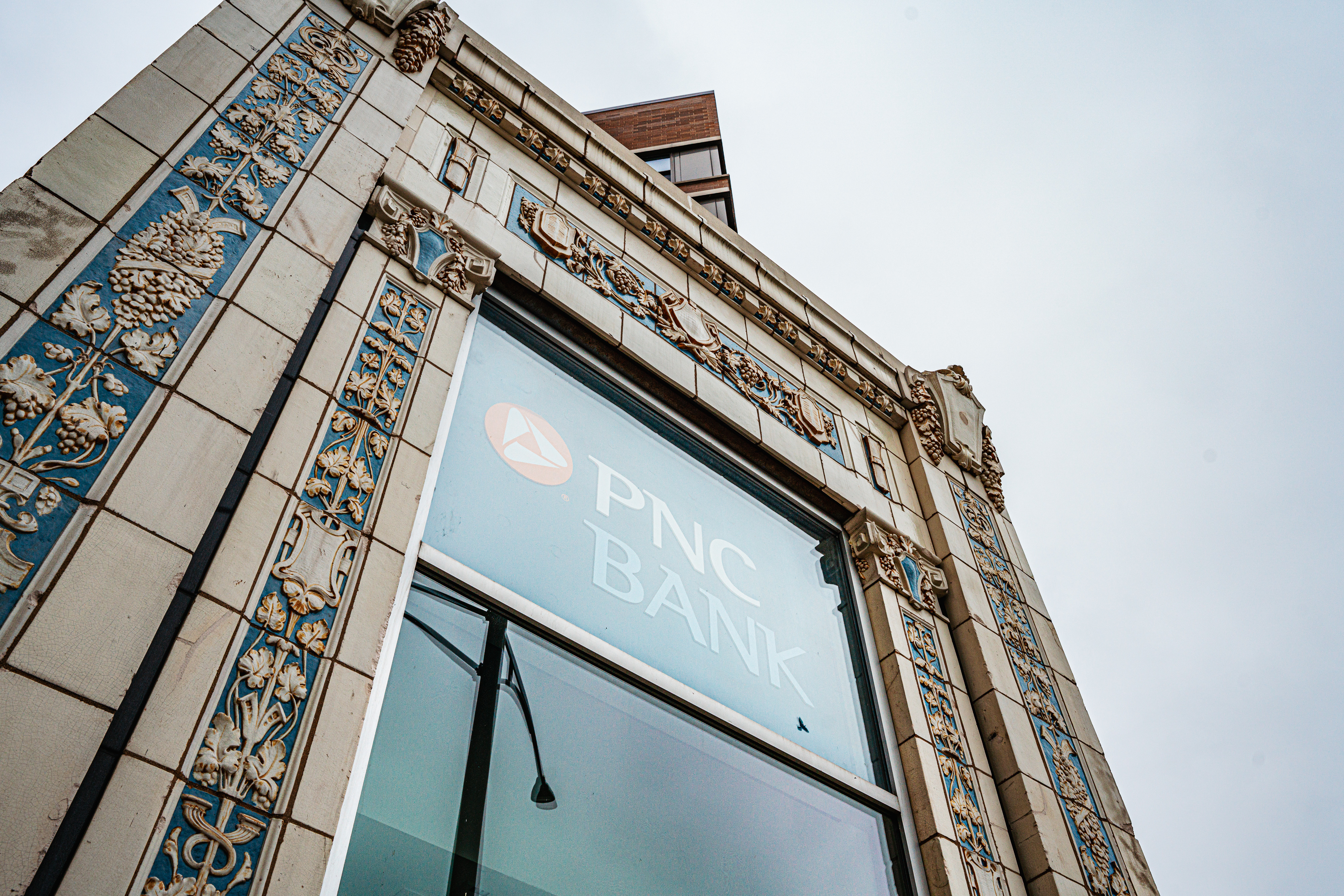
Although big by absolute standards, PNC and its closest peers haven’t reached the optimal size to extract such economies of scale and, without acquisitions, they risk falling short of the requisite tipping point.
Amid economic challenges, increased dispersion in high yield bonds suggests opportunities for selective investment choices versus broad sector-based strategies.
Investors may be missing out on midcap stocks despite their notable appeal in performance and limited risk compared to other firms.
What do Americans receive in return for our considerable spending?
Diversification is a core principle of sound investing, but building a diversified portfolio is much easier in theory than in practice. In the recently published “2024 Diversification Landscape,” portfolio strategist Amy Arnott of Morningstar took a deep dive into the diversification potential of several major asset classes. As advisors build their clients’ portfolios, there are a few lessons from this research. First, it is impossible to predict which asset class will do well in any given year. Holding a variety of asset classes helps guard against being overly exposed to an area that falls out of favor. Second, while the correlation between stocks and bonds has increased, bonds still provide relatively strong diversification benefits. This means that the classic 60/40 portfolio is tough to beat, having produced returns of about 18% in 2023. Third, the asset classes with the strongest diversification benefits may come as a surprise to some advisors. Real estate is a questionable diversifier despite its popularity, while cash is a strong diversifier.
Over recent decades, the hot tech trends (from search to cellphones to social media to the digital economy and now to AI) have been a predominantly American story.
The AI-driven cloud and chip industries come into focus in the next month as Microsoft, Meta Platforms, and others prepare to report earnings.
The Northern Trust Economics team shares its outlook for growth, employment, inflation and interest rates in major markets.
Discover the reasons investors diversify their portfolio with alternative investments.
Many investors are bullish, or not fearful, of the future of stock returns. At Smead Capital Management, we continue to explain to our investors how poor the outcomes will be. Some ask when this view will change.
Since Silicon Valley Bank became the second-biggest failure in US history a year ago, other lenders have been trying to take its place in banking the fast-moving, entrepreneurial world of startups and tech companies.
Demand for Treasuries is holding up as the US government floods the market with more than $180 billion of new debt this week, a testament to the appeal of high yields for shorter-term notes.
Today’s technology-driven landscape makes it easier than ever for RIAs to embrace automation across their tech stack and supercharge their businesses. Advisors can save time and minimize errors by using trading and rebalancing tools, portfolio management and CRM systems to manage accounts. Automation in data analysis also frees up time to provide more personalized advice or pursue new business. During this episode, my guest will cover:
The stakes are high as two of the biggest artificial intelligence players prepare to unveil results, a day after Meta Platforms Inc. alarmed investors with its forecast.
Some of the world’s biggest energy trading companies are returning to metals, years after getting burnt in the notoriously difficult markets.
We believe high-yield munis carry additional risks, but are worth consideration by investors in higher tax brackets who are comfortable taking added risks.
After a strong start to the year, equity investors are assessing whether a range of escalating risks will lead to continued volatility ahead. In this quarter’s Systematic Equity Outlook, we’ll explore macro and micro risks through a systematic lens, and how we’re positioning portfolios to harness alpha opportunities ahead.
If investors are detectives seeking clues for outperformance in the US large-cap equity market, natural language processing is a team of tireless assistants.