Looming U.S. and global policy shifts may potentially rattle markets, but a tactical and flexible approach could help investors navigate risks and opportunities regardless of how events play out.
Trend-chasing hedge funds are facing a fresh wave of competition from the ETF world, as asset managers make their latest push to open up strategies to the masses that were once reserved for the financial elite.
Join the experts from New Frontier Advisors and Franklin Templeton to discover how the next-generation dividend multiplier index strategies can revolutionize/augment your portfolio and complement traditional investments.
The decision to drill for oil is not primarily driven by government mandates or regulatory pressure, but rather by market forces.
Trade war fears and disappointing data have sparked a flood of defensive buying activity in consumer staples, utilities, and healthcare stocks.
The perfect pairing for your U.S. large-cap portfolio?
Artificial intelligence is pushing humanity toward a more efficient future, but like any world-changing technology will eventually crash and hurt investors, according to longtime Wall Street doomsayer Jeremy Grantham.
We delve into the unprecedented level of equity risk investors are taking, the record-high uncertainty measures facing further impacts from deglobalization, and the benefits of maintaining a diversified portfolio through it all.
The world’s biggest asset manager is finally allowing Bitcoin into its $150 billion model-portfolio universe.
Investors in US government bonds are wrapping up their biggest monthly gain since July as the Federal Reserve’s preferred gauge of underlying inflation rose at a tepid pace in January.
President Donald Trump would like to offer migrants who want to work in the US a “gold card,” akin to a green card, with one significant difference: the price tag.
President Donald Trump may have found a way to force the Federal Reserve to lower interest rates after all.
Should you avoid lower-rated, riskier investments like high-yield corporate bonds or bank loans? Not necessarily, but you should understand the risks.
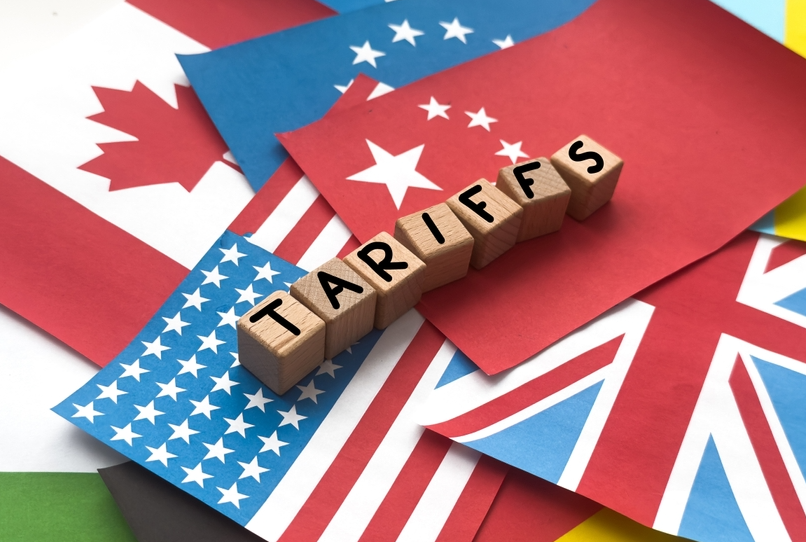
An aggressive U.S. tariff regime will come down hard on major economies.
The long-anticipated “infrastructure week” has finally arrived. This is a cornerstone of the administration’s agenda.
The fourth quarter 2024 earnings season more-or-less wraps up this week with the final trickle of retailers coming in, as well as the highly anticipated report from Nvidia which was out yesterday afternoon.
Measuring the effectiveness of ESG-labeled bonds can be a challenge, particularly with “outcome bonds,” which have specific environmental or social goals but lack standardized assessment criteria.
The last time we heard from Amazon.com Inc. Chief Executive Officer Andy Jassy, he was breaking it to investors that his company was forecasting $100 billion in capital expenditures this year — the largest outlay of the tech giants in the pursuit of artificial intelligence.
Investor sentiment around small-cap companies is worse than it’s been in months. As it turns out, the mood isn’t much better inside their corporate boardrooms.
Investors hoping that Nvidia Corp.’s earnings would rejuvenate the artificial intelligence trade didn’t exactly get the report they wanted.
Nvidia Corp., the chipmaker at the center of an AI spending boom, delivered good-but-not-great quarterly numbers on Wednesday, drawing a muted response from investors accustomed to blowout results.
A diversified investment strategy that seeks to juice returns through leverage is finding new love among big money managers — more than a decade after it blew up during the 2008 financial crisis.
In the report, John Kerschner, Head of US Securitized Products & Portfolio Manager, and John Lloyd, Lead for the Multi-Sector Credit Strategies & Portfolio Manager, review the best-performing U.S. fixed income sectors of 2024 – what worked, what didn’t, and what it means for investors going forward.
If Trump tariffs Chinese, European, or Canadian products, those countries tend to enact counter-balancing tariffs on U.S. products. Such slows demand for goods and services between all parties, again a deflationary process.
The economy can grow through policy changes.
We recently sat down with Justin Owens, our senior director and co-head of strategic asset allocation, to discuss the next phase of liability-driven investing (LDI) and the key trends driving this evolution. Below is a recap of our conversation.
The overall size of the municipal bond market is over $4 trillion. While this a very large market, an investor’s personal situation combined with the nuances of the municipal bond market can sometimes make it feel much smaller.
Senator Cynthia Lummis (R-WY) takes a pivotal role in shaping how America approaches cryptocurrency and blockchain technology.
Nvidia, the biggest AI chip firm, reports Wednesday with investors watching sales of Nvidia's newest chips and worried about cheaper competition from systems like DeepSeek.
A healthy jobs report should keep real estate traders appeased, but cautious optimism is warranted moving forward.
On this week’s episode of ETF Prime, VettaFi’s Todd Rosenbluth shares advisor polling data on fixed income.
For the last five years, BP Plc has squandered its shareholders’ money. That’s why, forced by poor returns and the arrival of an activist investor, it finally “reset” its strategy on Wednesday.
Warren Buffett's latest shareholder letter contains the usual folksy mix of wisdom and humor.
General Motors Co. plans to step up its program of buybacks by repurchasing $6 billion in shares and raising its dividend, rewarding investors by pushing more cash off its balance sheet.
The U.S. economy remains structurally productive. American Economic Exceptionalism is powered by innovation and labor flexibility.
Eli Lilly & Co. will spend at least $27 billion to build four US manufacturing plants, the latest company to brace for the potential impact of President Donald Trump’s tariffs.
Nvidia Corp.’s earnings are set to dictate whether artificial intelligence can regain its status as the key driver behind Wall Street gains — or trigger more weakness after the Magnificent Seven group of technology stocks fell into correction territory.
The truth is that most of your prospects have some kind of financial problem or issue. Otherwise, they wouldn’t agree to meet with you. Their lack of commitment to you at the end of your process is not necessarily because they're an unqualified lead.
Unfortunately, I hear stories about people unwilling to seek HR help for many reasons. It is a tragedy when this happens because good HR support can be the key to helping with so many things.
Healthcare stocks were hurt by volatility from factors that include policy-related uncertainty, which hasn’t faded since the US election.
Dean LeBaron’s name may not be familiar to many readers, especially those who only began their careers in the 21st century. But all of us should know who he is. Before there was even a term for it, Dean was the first truly successful quant.
We explore drivers that may contribute to continued outperformance of European stocks since the bull market began in October 2022.
In today’s competitive landscape, a training program may be crucial to help advisors master retirement plans and excel in client engagement. Training builds a knowledgeable, adaptable and trustworthy team.
When it comes to stocks and the stock market, do you speculate in stocks or do you invest in stocks? In this video, Chuck Carnevale, Co-Founder of FAST Graphs, a.k.a. Mr. Valuation is going to look at the distinctions between investing or speculating, and going to make sure that you understand the differences between speculating and investing, and how that should alter your behavior.
The greatest benefits of TCJA were deep in its details.
Tax season can be stressful, but with the right approach, advisors can turn it into an opportunity.
Are European equities poised for a sustained recovery relative to U.S. equities? We outline five reasons why, as long-term investors, we continue to favor U.S. equities over European equities.
In this post we attempt to demystify the mechanics and implications behind why the Fed is considering pausing its QT program.
On this episode of the “ETF of the Week” podcast, VettaFi’s Head of Research Todd Rosenbluth discussed the BondBloxx Private Credit CLO ETF (PCMM) with Chuck Jaffe of Money Life. The pair discussed several topics related to the fund to give investors a deeper understanding of the ETF overall.
Join experts from State Street Global Advisors, Richard Bernstein Advisors, and Auour Investments and discover how you can best prepare your portfolio for challenges and opportunities in 2025.